

When a child has wetting, rushing, holding, or frequent bathroom accidents, families can feel unsure about what to try first. A simple child bladder health checklist can turn a stressful topic into a few calm, repeatable habits. The goal is not perfection or blame. It is to help your child notice body signals, access the bathroom, drink regularly, and feel supported.
Start with one small step today: Explore the free Bladder Defender EduPlay Gaming App for playful bladder-health education and confidence-building activities.
This guide is for parents and caregivers of children, especially ages 4 to 12. It is educational wellness information, not medical care or a diagnosis. If you are worried about your child's symptoms, contact their pediatric healthcare professional.
What belongs on a child bladder health checklist?
A child bladder health checklist is a practical reminder of the daily conditions that support comfortable bathroom habits: regular fluids, timely bathroom breaks, relaxed toilet positioning, movement, bowel awareness, and a shame-free family plan. It should also include school or travel preparation and clear signs that call for professional guidance.
Think of the checklist as a family routine, not a scorecard. Children develop at different rates, and wetting or accidents are not evidence that a child is lazy, defiant, or doing something wrong. Praise participation, communication, and effort rather than promising a particular result.
- Offer water regularly and keep most fluids earlier in the day.
- Plan relaxed bathroom opportunities instead of waiting for an emergency.
- Make sure your child can sit comfortably with feet supported.
- Notice stool patterns, belly discomfort, and signs of holding.
- Build movement, breathing, and body-awareness breaks into the day.
- Prepare a discreet school, camp, sports, or travel plan.
- Use neutral words that protect your child's dignity.
- Know when to contact a pediatric healthcare professional.
1. Is your child's hydration routine steady?
Steady hydration means offering age-appropriate fluids across the day rather than encouraging a child to drink very little and then catching up at bedtime. Water is a useful default, while a child's healthcare professional can help determine an appropriate amount based on age, weather, activity, and individual needs. Avoid making fluids a punishment or using dehydration as a strategy.
- Offer fluids with meals and between meals. Keep a child-friendly water bottle available when practical.
- Front-load most drinking earlier in the day. Many families find it helpful to offer more fluids in the morning and afternoon, then keep evening drinking calm and responsive to thirst.
- Do not force a rigid cutoff. A thirsty child should be able to drink. Ask a healthcare professional about fluid timing if nighttime wetting or frequent urination is a concern.
- Review drink choices. Caffeine, fizzy drinks, citrus juices, and sports drinks may irritate the bladder or increase urine production for some children. NIDDK recommends discussing healthy fluid amounts with a child's healthcare provider and limiting drinks that may irritate the bladder. Read the NIDDK prevention guidance for more context.
- Watch for context. Hot weather, exercise, illness, and long car rides can change a child's needs.
Do not turn hydration into a competition. A sticker, a colorful cup, or a playful water break can invite participation without making bathroom habits feel like a test.
2. Does your child have regular bathroom opportunities?
Children may become absorbed in play, schoolwork, sports, or screens and ignore body signals. A predictable bathroom rhythm can make it easier to pause before urgency becomes overwhelming. NIDDK describes daytime urination every 2 to 3 hours, or about 4 to 7 times per day, as a general prevention habit, but your child's own healthcare professional can personalize guidance.
- Offer a bathroom visit after waking.
- Build in a mid-morning opportunity.
- Offer a visit around lunch or before leaving school.
- Plan a mid-afternoon break.
- Invite a bathroom visit before a long drive, practice, movie, or outing.
- Include a relaxed visit as part of the bedtime routine.
The exact clock times are less important than consistency and flexibility. Avoid forcing your child to sit for long periods or treating a missed bathroom visit as a failure. If you want a deeper step-by-step routine, read this guide to bladder training for kids, then adapt the ideas to your child's age and schedule.
3. Can your child use a relaxed toilet position?
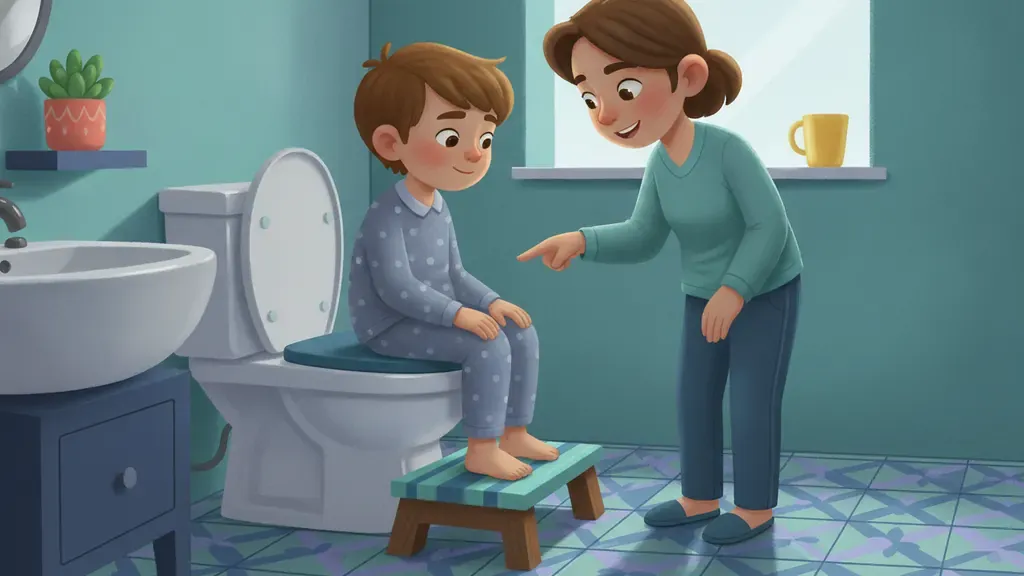
Comfortable positioning can help a child slow down and give their body time to empty without straining. The setup should feel stable, private, and unhurried. A footstool can help smaller children reach a supported position, while a caregiver can quietly check that the child is not balancing, hovering, or rushing.
- Place both feet on the floor or on a sturdy step stool.
- Let knees relax apart rather than squeezing the legs together.
- Encourage a slight forward lean with shoulders relaxed.
- Remind your child to breathe normally instead of pushing.
- Keep toilet paper and handwashing supplies within easy reach.
- Allow enough time for the visit without demanding a specific outcome.
A calm bathroom can make the routine easier. Consider a night-light, a step stool, a warm towel, or a small basket for supplies. Children who avoid unfamiliar bathrooms may need a gradual plan, a trusted adult, and permission to ask for a break.
4. Have you checked for bowel and bladder patterns?
Bladder and bowel habits often affect one another, so a complete child bladder health checklist should include simple observations about poop, belly comfort, and holding. Constipation can be easy to miss, especially when a child has some bowel movements but they are hard, painful, or difficult to pass. Do not diagnose constipation from a checklist. Record patterns and ask a pediatric healthcare professional what they mean.
- Notice whether stools are hard, dry, painful, or pellet-like.
- Ask whether your child avoids the toilet, hides to poop, or regularly holds.
- Watch for belly discomfort, bloating, or underwear staining.
- Offer fiber-rich foods and fluids as part of ordinary family meals.
- Bring a brief pattern log to the child's healthcare professional if concerns continue.
For a focused explanation of the constipation and wetting connection, see this parent guide to constipation and bedwetting. You can also review NIDDK's signs and causes of constipation in children. A healthcare professional can recommend next steps when bowel symptoms persist.
5. Are movement and calming breaks part of the day?
Movement gives children a way to build body awareness and release energy, while calm breathing can make bathroom visits feel less rushed. Keep these activities playful and optional. They are not a replacement for medical evaluation or individualized care, and they should never be framed as a test of whether a child can stay dry.
- Take short movement breaks between long periods of sitting.
- Try animal walks, stretching, dancing, or a gentle family walk.
- Practice three slow breaths before a bathroom visit if your child enjoys it.
- Use simple body words such as full, empty, tight, relaxed, urge, and comfortable.
- Celebrate noticing and communicating body signals.
Families who want more ideas can explore this beginner guide to pediatric pelvic floor exercises. Keep the focus on safe, age-appropriate movement and confidence rather than on a promised outcome.
Looking for playful practice between routines? Learn about TheraPlay at Home, a clinician-designed, play-based resource that supports movement, body awareness, and family participation.
6. Is there a school, sports, travel, or sleepover plan?
A child may manage a routine at home and still feel worried about school bathrooms, field trips, sports, camp, or sleepovers. A quiet preparation plan reduces surprises and protects privacy. Ask your child what would make the setting feel easier, then share only the information a trusted adult needs to provide practical support.
| Situation | Helpful preparation |
|---|---|
| School day | Identify a comfortable bathroom, plan discreet access, and tell a trusted school adult if support is needed. |
| Sports or activities | Offer a bathroom break before activity and pack water plus a change of clothes when appropriate. |
| Travel | Plan stops, locate bathrooms, and avoid making the child wait until urgency is extreme. |
| Camp or sleepover | Agree on a private signal and identify one safe adult who knows the plan. |
Use matter-of-fact language: "Your body may need a bathroom break, and we have a plan." Avoid telling a child to hold it for as long as possible or making accidents a public topic. If school anxiety, bathroom avoidance, or repeated daytime accidents are interfering with daily life, ask a healthcare professional for guidance.
7. Does your language protect your child's confidence?
Children need to know that accidents are information, not a character judgment. Shame can make it harder to talk about urges, pain, constipation, or wetting. Use calm language that separates the child from the problem and keeps the next step practical.
- Say, "Your body is still learning, and we can notice the pattern together."
- Say, "Thank you for telling me. Let's get comfortable and make a plan."
- Praise effort: "You listened to your body and took a break."
- Keep cleanup neutral and private.
- Avoid labels such as lazy, babyish, careless, dirty, or bad.
- Do not compare siblings or classmates.
Progress can look like telling an adult about an urge, using an unfamiliar bathroom, drinking regularly, or asking for help. Those wins matter even when wetting or accidents have not changed yet.
When should a parent contact a pediatric healthcare professional?
Contact your child's pediatric healthcare professional when wetting, urgency, frequency, pain, constipation, or bathroom avoidance is persistent, sudden, worsening, or interfering with sleep, school, activities, or confidence. Seek prompt medical guidance for pain or burning with urination, blood in urine, fever, unusual thirst, vomiting, back or side pain, inability to urinate, or a sudden return of wetting after a long dry period. NIDDK's symptoms and causes overview is a useful discussion starter, not a substitute for an evaluation.

This checklist cannot determine the cause of a symptom. A healthcare professional may ask about timing, fluids, bowel habits, sleep, medications, family history, and other symptoms. A short, private pattern log can make that conversation more useful.
What to record for a healthcare visit
- Approximate bathroom times and urgent episodes.
- Daytime wetting, nighttime wetting, or stained underwear.
- Drinks and the general timing of fluids.
- Stool frequency, texture, discomfort, or withholding.
- Pain, fever, blood, strong thirst, vomiting, or other new symptoms.
- Sleep, snoring, stress, school changes, or activity changes.
- What routines you tried and how your child responded.
Do not wait for a checklist to be complete before asking for help. If something feels wrong or your child seems unwell, reach out.
How can families use this checklist without creating pressure?
Choose one or two habits for the first week, then review what felt easy or difficult. A child bladder health checklist works best when it is flexible, private, and adjusted with your child's voice. Keep the routine focused on comfort, access, hydration, body awareness, and support. It is a tool for conversation, not a pass-fail chart.
- Pick one daily routine, such as a morning drink or pre-outing bathroom visit.
- Explain the reason in simple, neutral language.
- Invite your child to choose a reminder, color, song, or private signal.
- Notice patterns for several days without judging them.
- Share persistent or concerning patterns with a pediatric healthcare professional.
Bladder Breakthrough takes a clinician-designed, play-based approach to home wellness education. Families can learn about the Bladder Breakthrough Virtual Course for broader parent education, or start with free playful tools such as the Bladder Defender EduPlay Gaming App. Choose the level of support that fits your family, and keep professional medical guidance part of the plan when symptoms call for it.
Frequently asked questions
These parent questions cover common child bladder-health routines, drink choices, bowel patterns, medical warning signs, and shame-free communication. Use the answers as general education, then ask your child's pediatric healthcare professional about symptoms or concerns.
How often should a child use the bathroom during the day?
Many children urinate about 4 to 7 times during the day, often every 2 to 3 hours, but needs vary. A child's healthcare professional can personalize guidance based on age, fluids, weather, activity, and symptoms. Avoid forcing long holds or rigid timing when your child is uncomfortable.
What drinks may irritate a child's bladder?
Caffeine, fizzy drinks, citrus juices, and sports drinks may irritate the bladder or increase urine production for some children. Water is a useful default, but ask a healthcare professional about the right amount and timing for your child rather than imposing a strict fluid rule.
Can constipation affect bladder habits?
Constipation can occur alongside bladder-control concerns, and bowel habits are worth noting when a child has urgency, wetting, or holding. Hard or painful stools, withholding, belly discomfort, or stool staining deserve a conversation with a pediatric healthcare professional.
What are signs that a child may need medical guidance?
Contact a pediatric healthcare professional for persistent or worsening symptoms, pain or burning with urination, fever, blood in urine, unusual thirst, vomiting, back or side pain, inability to urinate, or wetting that returns suddenly after a long dry period. Seek prompt help if your child seems unwell.
How can I talk about accidents without shaming my child?
Use neutral language, protect privacy, and focus on the next practical step. You can say, "Thank you for telling me. Let's get comfortable and figure out what your body needs." Praise communication and participation, not a promised dry night.
Medical note: This article provides general educational and wellness information. It is not medical advice, diagnosis, or treatment. A qualified pediatric healthcare professional should evaluate symptoms and answer questions about your child's health.