
Constipation and Bedwetting Secrets Revealed: What Experts Don't Want You to Know

Listen up, Hero Parents! If you are currently standing in a laundry room that smells like a mix of detergent and desperation, this is for you. You’ve tried the reward charts. You’ve tried the "no water after 6 PM" rule (which, spoiler alert, usually backfires). You’ve probably even been told by well-meaning professionals that your child will simply "outgrow it."
But here is the truth that’s going to change your life: The secret to dry nights might not be in the bladder at all, it might be in the gut.
At Bladder Breakthrough®, we don’t believe in the "wait and see" approach. We believe in the "let’s crush this" approach. Today, we are pulling back the curtain on the physiological connection that many experts overlook: the massive, undeniable link between constipation and bedwetting in children.
We’re talking about the "Hidden Bully" in your child’s belly that is sabotaging their nighttime potty training. It’s time to stop the guesswork, reclaim your sleep, and help your little hero level up to dry nights.
The "Hidden Bully": How Constipation Sabotages the Bladder
You might be thinking, "But Penny, my kid poops every day! They aren't constipated."
Hold that thought. This is the first "secret" we need to bust wide open. In the world of pediatric pelvic health, "pooping every day" does not automatically mean a child isn't constipated. Clinical research shows that a child can have a daily bowel movement and still be "backed up" with a large mass of stool in the rectum that never fully empties.
This is what we call Occult (Hidden) Constipation.
The Anatomy of a Squeeze
The bladder and the rectum are neighbors, very close neighbors. Think of them like two kids sharing a small bunk bed. When the rectum (the bottom bunk) gets overstuffed with old, hard stool, it stretches out. Because the pelvic cavity has limited space, that enlarged rectum starts pushing upward and outward.
It’s literally bullying the bladder.
When the rectum is full, it presses against the back of the bladder. This does two devastating things to your child’s nighttime success:
- Reduced Capacity: It physically reduces the amount of urine the bladder can hold. A bladder that should hold 8 ounces can suddenly only hold 4 because the "Poop Bully" is taking up all the room.
- Spasms and Signals: The pressure triggers the bladder’s nerves, sending frantic "I have to go!" signals to the brain. In a deep-sleeping child, the brain can't process these signals correctly, leading to an involuntary release.

Image Prompt: A heroic-style anatomical illustration showing a friendly "Bladder Hero" being squeezed by a grumpy "Stool Bully" inside a child's belly. The style is colorful, educational, and fun, emphasizing the physical space issue.
The Science the "Experts" Overlook
If you’ve visited a pediatrician for bedwetting, you likely heard about "hormones" or "deep sleep." While those factors matter, the clinical evidence for constipation is staggering.
A landmark study examined 30 children struggling with chronic bedwetting (enuresis). Every single one of them had an abdominal X-ray that revealed a rectum distended with stool, even though most of their parents thought their bowel habits were normal!
The kicker? After treating the constipation with a dedicated bowel regimen, 25 out of those 30 children stopped wetting the bed within three months. (Hodge et al., 2012).
That’s an 83% success rate just by focusing on the gut! This is why we integrate bowel management into our Stay Dri™ Master Plan. You can’t fix the plumbing if the pipes are clogged!
Why isn't this common knowledge?
Standard medical protocols often treat the symptoms rather than the system. They give a pill to reduce urine production or an alarm to wake the child up. But if the underlying cause is a physical blockage in the rectum, those "solutions" are just bandaids. At Elevacare Health LLC, we look at the whole child, the pelvic floor, the gut, and the brain-bladder connection.
The Pelvic Floor Connection: The Secret Weapon
When we talk about pediatric pelvic floor exercises, people often look confused. "Kids have pelvic floors?"
Absolutely! And they are the "Command Center" for staying dry.
When a child is chronically constipated, they often develop a habit of "holding." They tighten their pelvic floor muscles to keep the poop in (sometimes because it hurts to go, or they don't want to stop playing). Over time, these muscles become "hypertonic", meaning they are stuck in the "ON" position.
A tight, exhausted pelvic floor cannot do its job at night. It’s like trying to hold a heavy grocery bag with a muscle that’s already cramping. Eventually, the muscle gives up, and, splash, the bed is wet.
Training the Nighttime Ninjas
We teach kids how to become Nighttime Ninjas. Through our Bladder Defender™ Gaming App, children learn to coordinate these muscles through play. Instead of boring "exercises," they are completing missions and leveling up their pelvic health.

Image Prompt: A diverse family (Mom, Dad, and two children of different ethnicities) dressed in superhero capes, standing triumphantly in a bright, modern living room. They are looking at a tablet showing the Bladder Defender app. The vibe is heroic, joyful, and empowered.
How to Spot the "Poop Bully": 5 Red Flags for Parents
If you want to stop bedwetting, you have to become a "Stool Sleuth." Look for these signs that constipation is the real villain:
- The "Mega-Log": Does your child produce stools that are surprisingly large in diameter? If it looks like it belonged to an adult (or a giant), the rectum is likely stretched out.
- The Skid Marks: Liquid stool can sometimes leak around a hard mass, leaving "skid marks" in the underwear. This isn't poor wiping; it's a sign of severe backup.
- The "Potty Dance": Crossing legs, squatting, or hiding in a corner are "holding behaviors."
- Inconsistent Frequency: Going three times one day and then not again for three days is a major red flag.
- Hard Pellets: If it looks like rabbit droppings, your child is dehydrated and their transit time is too slow.
The Bladder Breakthrough® Action Plan
Ready to take charge? You don't have to go it alone. We’ve designed a system that turns this struggle into a victory.
1. Hydration, The Counter-Intuitive Hero
Most parents stop giving water at 6 PM. Stop doing this! When you restrict fluids, the body becomes dehydrated. Dehydration leads to harder stools, which leads to... you guessed it... constipation and bedwetting. Instead, push fluids during the morning and afternoon to keep the "pipes" moving.
2. The "Power Squat"
Humans weren't meant to poop sitting at a 90-degree angle. Use a stool to lift your child's knees above their hips. This relaxes the puborectalis muscle and allows the rectum to empty completely.
3. Pediatric Pelvic Floor Exercises (The Fun Way!)
We don't do "Kegels" for kids. That's boring. We do "Bladder Bounces" and "Belly Breaths." Check out our Bladder Bounce App Tracker to see how we make this engaging.
4. The 5-Day Challenge
If you want a jumpstart, join our Stay Dri™ 5-Day Bladder Breakthrough Challenge. It’s the perfect way to see if our gamified approach is right for your family.

Image Prompt: A young boy of Hispanic descent dressed as a superhero, "flying" through the air while holding a glass of water. Background features a vibrant comic-book style "POW!" and "ZAP!" graphics focused on healthy habits.
Why Gamification is the "Cheat Code" for Success
Let's be real: no 7-year-old wants to talk about their "distended rectum" or "pelvic floor dysfunction." They want to play.
That is why Bladder Breakthrough® isn't just a clinic, it's an edutainment empire. By using the Bladder Defender™ Gaming App, we remove the shame and replace it with a mission.
- The Problem: Bedwetting feels like a failure.
- The Breakthrough: Bedwetting is a "Boss Battle" we can win together.
When kids see themselves as heroes in training rather than "the kid who wets the bed," their cortisol levels drop, their confidence soars, and their brain-bladder connection begins to rewire. It is the ultimate Theraplay experience.
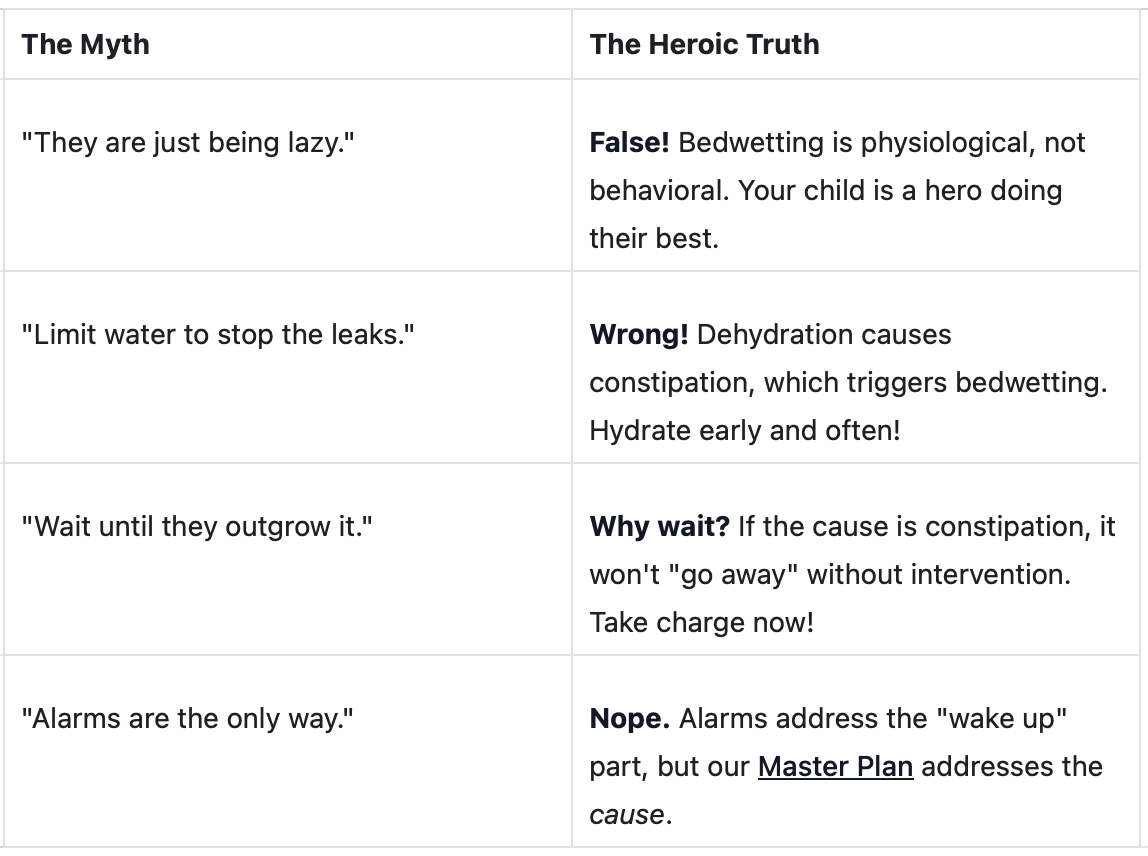
Common Myths vs. Heroic Truths
Take the First Step Toward Victory
You’ve been waiting for this. You’ve been looking for an answer that actually makes sense. You don't have to keep buying the expensive pull-ups or doing the midnight sheet changes.
The transformation is possible. Your child is ready to level up. Are you?
Join the Stay Dri Squad today! Whether it's through our Virtual Course or our Enuresis Survival Guide, we have the tools to help your child stop bedwetting fast.

Image Prompt: A diverse group of children of various racial backgrounds (Black, White, Asian) dressed in superhero costumes, standing together with a Caucasian female PT (Dr. Tiffani S. Bacon). They are all smiling and giving thumbs up. Text on their "hero badges" says "STAY DRI SQUAD".
General Insights: Parental Q&A
Q: What is the best way to stop bedwetting in children in 2026?
A: The most effective, modern approach is a combination of bowel management (treating hidden constipation), pediatric pelvic floor exercises, and gamified digital therapy. Addressing the brain-bladder-gut connection simultaneously leads to the fastest results.
Q: Can constipation really cause nighttime accidents?
A: Yes! Over 40% of children with bedwetting have constipation as a primary factor. A full rectum puts physical pressure on the bladder, reducing its capacity and causing it to spasm during sleep.
Q: What are the best pelvic floor exercises for kids with bedwetting?
A: Exercises should focus on "coordination" rather than just "strength." Belly breathing, "the bladder bounce," and learning to fully relax the pelvic floor during bowel movements are key. Gamified apps like Bladder Defender™ help kids perform these correctly.
Q: Is Miralax necessary for bedwetting?
A: While many doctors prescribe stool softeners to clear the "Poop Bully," they are most effective when paired with behavioral changes, hydration, and pelvic floor training. Always consult with a specialist like a pediatric pelvic PT for a personalized plan.
Q: How do I know if my child's bedwetting is "normal"?
A: While occasional accidents occur during training, persistent bedwetting after age 5 is often a sign of an underlying physiological issue like constipation or a delayed brain-bladder connection.
References & Further Reading
- Hodge, G. D., et al. (2012). "Occult constipation: a common and treatable cause of enuresis and daytime wetting." Journal of Urology. This study highlights how 83% of children stopped wetting after constipation treatment.
- Burgers, R., et al. (2010). "The role of constipation in pediatric bladder dysfunction." Journal of Pediatric Urology.
- Bacon, T. S. (2025). The Stay Dri Master Plan: A Systemic Approach to Pediatric Enuresis. Elevacare Health Publishing.
- National Institute of Diabetes and Digestive and Kidney Diseases (NIDDK). "Bedwetting (Enuresis) in Children: Causes and Treatment."
- American Academy of Pediatrics (AAP). "The Link Between Constipation and Urinary Tract Issues in Children."
Ready to start the journey? Contact Dr. Tiffani and the team or explore our pricing options for families. Let's make those wet nights a thing of the past!
Disclaimer: The information provided in this blog is for educational purposes only and is not a substitute for professional medical advice, diagnosis, or treatment. Always seek the advice of your physician or other qualified health provider with any questions you may have regarding a medical condition.