

You've tried everything. The waterproof mattress protector is on its third replacement. You've limited fluids after dinner, set alarms for midnight bathroom trips, and possibly even invested in a bedwetting alarm that now collects dust in the closet. Your child is frustrated, you're exhausted, and the laundry pile seems never-ending.
But here's something you might not have considered: the real culprit might not be your child's bladder at all, it could be their bowels.
The connection between constipation and bedwetting is one of the most overlooked aspects of pediatric continence care, and honestly? It drives me a little crazy. Because when we miss this connection, families suffer unnecessarily, trying treatment after treatment that can't possibly work because we're not addressing the root cause.
Research shows that a staggering number of children with bedwetting have significant constipation, even when their bowel movements seem perfectly normal to parents. In one groundbreaking study from Wake Forest Baptist Medical Center, researchers discovered that all 30 children with bedwetting had substantial stool buildup in their rectums, despite most having what appeared to be regular bowel habits.
Let that sink in for a moment. Every. Single. One.
So if you've been battling bedwetting without success, it's time to take a hard look at what's happening with your child's digestive system. Let's walk through the seven most common mistakes families make when dealing with constipation and bedwetting, and more importantly, how to fix them.

Mistake #1: Not Recognizing Constipation as the Hidden Culprit
Here's the thing: when your child wets the bed, the natural instinct is to focus on the bladder. Makes sense, right? Except when the bladder isn't actually the problem.
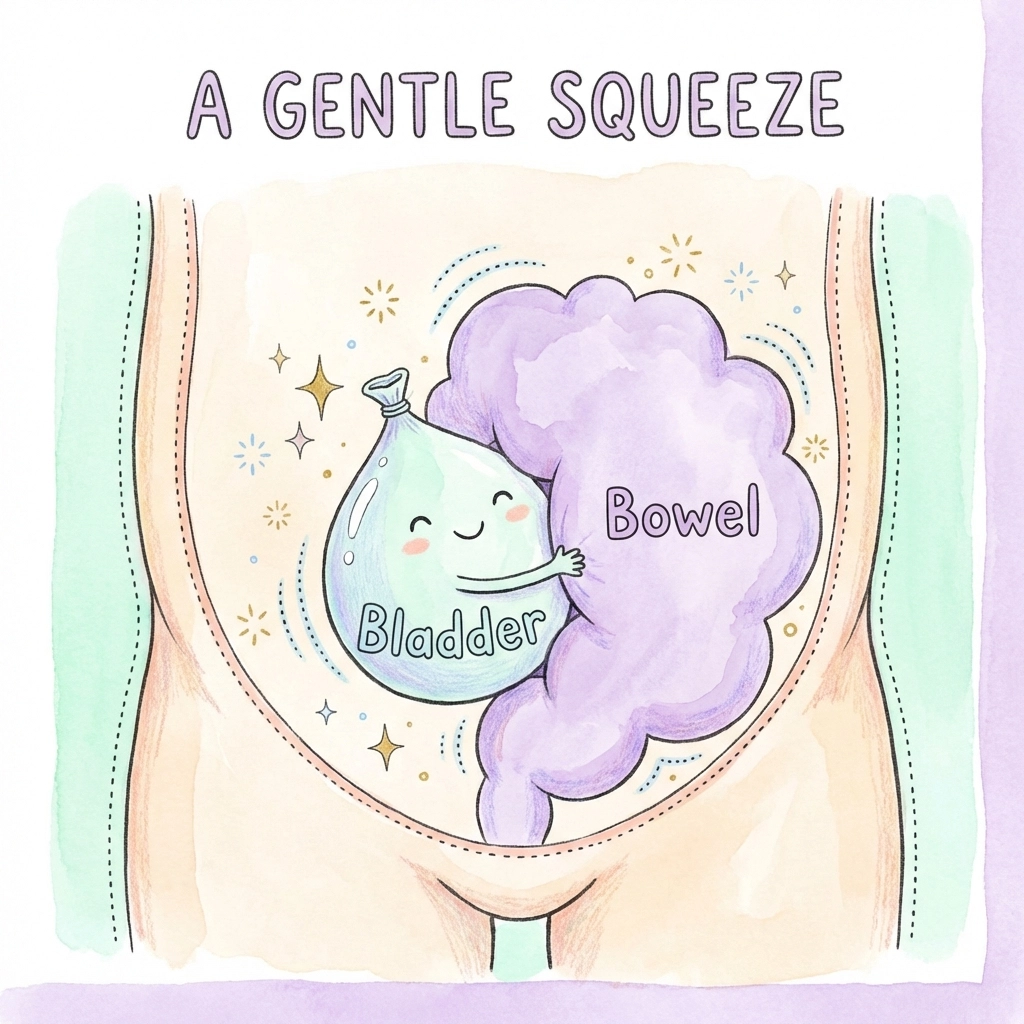
The reality: Constipation is frequently the invisible force behind bedwetting, but it's incredibly easy to miss. Your child might poop every day. The stool might look normal. There might be zero complaints of tummy aches. And yet, significant stool buildup could be pressing against the bladder, reducing its capacity and interfering with the normal signals that wake your child up at night.
Think of it like this, imagine trying to fill a water balloon that's being squeezed on one side. It can't hold as much, and it's more likely to leak under pressure. That's essentially what's happening when a backed-up rectum presses against the bladder.
The fix: Start asking the right questions:
- How often does your child have bowel movements? (Less frequent than every other day is a red flag)
- What's the consistency? (Hard, pellet-like stools signal trouble)
- Does your child strain or spend a long time on the toilet?
- Are there any complaints of stomach pain, even mild ones?
Don't just assume everything's fine because you see regular bowel movements. The devil is in the details, and sometimes, it's hiding in places you can't see.
Mistake #2: Relying on Surface-Level Diagnostic Criteria
Standard constipation questionnaires ask about frequency and consistency, and that's a start. But these criteria cannot identify the enlarged rectum that's physically interfering with bladder function.
Your pediatrician might check off all the boxes for "normal" bowel function based on what parents report, while significant stool impaction lurks beneath the surface. It's like judging an iceberg by what's visible above water, you're missing 90% of the problem.
The fix: Request imaging. Yes, really. An abdominal X-ray or rectal ultrasound can visualize stool buildup that you and your child's doctor can't see or feel during a routine exam. This is the most accurate diagnostic approach for understanding what's really happening inside your child's body.
I know it might feel like overkill to request imaging for bedwetting, but trust me on this, it's one of those situations where seeing is believing. When parents see the actual extent of constipation on an X-ray, the connection suddenly clicks into place. And more importantly, it guides appropriate treatment intensity from the start.
Mistake #3: Treating Bedwetting Without Addressing the Constipation First
This is perhaps the most frustrating mistake of all, throwing solution after solution at bedwetting while completely ignoring the underlying constipation. It's like trying to bail water out of a boat without plugging the hole first.
Families invest in expensive bedwetting alarms, restrict evening fluids (which can actually make constipation worse, by the way), wake their child multiple times per night, and sometimes even turn to medication, all while the real problem continues festering.
The fix: Treat the constipation first. Period.
The research on this is crystal clear and honestly pretty remarkable. In one study, 83% of constipated children were completely cured of bedwetting within three months after starting laxative therapy. Another analysis found that 63% of patients saw their nighttime accidents disappear entirely just by successfully treating constipation.
Those are not small numbers. We're talking about the majority of children finding complete relief, not by focusing on the bladder at all, but by addressing what was pressing against it.
Before you invest another dollar in bedwetting-specific treatments, make sure you've thoroughly addressed any constipation issues. You might be shocked at how quickly things improve once you're actually treating the right problem.
Mistake #4: Using Inadequate or Half-Hearted Constipation Treatment
Okay, so you've accepted that constipation is the issue. Great! But here's where many families stumble: they start with mild interventions, see modest improvement, and think "good enough."
Here's the hard truth, if there's significant stool impaction, gentle measures like adding a few prunes to your child's diet probably aren't going to cut it. You need a more aggressive approach to clear the backlog before maintenance strategies can be effective.
The fix: Work with your physician to implement a proper bowel cleanout protocol. This typically starts with polyethylene glycol (commonly known as Miralax®), which works by pulling water into the stool to soften it and make it easier to pass.
But here's the key: if the rectum remains enlarged after initial treatment, you may need to escalate. This might mean:
- Increasing the laxative dose
- Adding stimulant laxatives under medical supervision
- Implementing enemas for more immediate clearance
- Using a combination approach
I cannot emphasize enough: all medical therapy should be supervised by a physician. Don't DIY this part. Your child's doctor needs to guide dosing, monitor progress, and adjust the plan as needed.
Think of it like clearing a clogged drain, sometimes you need more than baking soda and vinegar. Sometimes you need the heavy-duty stuff. And there's no shame in that. The goal is to get results, not to use the gentlest possible approach while your child continues suffering.

Mistake #5: Ignoring Diet and Lifestyle Changes
On the flip side, some families make the opposite mistake, relying exclusively on medication without addressing the habits and patterns that created the constipation in the first place.
Laxatives can be incredibly helpful, even necessary, but they work best when combined with sustainable lifestyle changes. Otherwise, you're constantly fighting an uphill battle.
The fix: Implement a comprehensive approach that includes:
Dietary changes:
- Increase fiber from whole food sources (fruits, vegetables, whole grains, legumes)
- Add high-fiber cereals to breakfast (look for at least 3-5 grams per serving)
- Ensure adequate water intake throughout the day
- Reduce constipating foods like excessive dairy, white bread, and processed snacks
Bathroom habits:
- Encourage regular toilet visits, ideally 4-7 times daily, with a dedicated sit-time after meals
- Always have your child use the bathroom right before bed
- Create a relaxed bathroom environment (footstool for proper positioning, no rushing)
- Celebrate successful bowel movements without creating pressure
Physical activity:
- Regular movement helps stimulate bowel function
- Walking, bike riding, swimming, any activity counts
- Even simple stretching or yoga can help
Evening fluid management:
- Contrary to popular belief, you don't want to severely restrict fluids
- Instead, front-load hydration earlier in the day
- Limit evening caffeine (yes, even from chocolate or soda)
- Avoid large fluid intake in the hour before bed
These changes might sound basic, but they create the foundation for long-term success. You're not just treating symptoms, you're building healthy habits that will serve your child for life.
Mistake #6: Overlooking Medication-Related Constipation
Here's an ironic twist that catches many families off guard: some medications used to treat bedwetting can actually worsen constipation, creating a vicious cycle that makes the original problem even harder to solve.
Medications like desmopressin (DDAVP) or anticholinergics can have constipating side effects. So you're treating the bedwetting, but inadvertently making the constipation worse, which then makes the bedwetting worse. It's a frustrating merry-go-round that leaves everyone dizzy.
The fix: If your child is on any medication for bedwetting, monitor bowel function closely. Keep a simple log of:
- Frequency of bowel movements
- Stool consistency (use the Bristol Stool Chart for reference)
- Any straining or discomfort
- Changes in appetite or stomach complaints
Report any constipation immediately to your healthcare provider. They may need to adjust the medication, add a stool softener, or reconsider the treatment approach entirely.
And here's a pro tip: before starting any bedwetting medication, make sure constipation has been thoroughly addressed. Your doctor should be checking for this, but you can advocate for your child by bringing it up directly. "We want to make sure there's no constipation before we start this medication, can we do imaging to confirm?"

Mistake #7: Going It Alone Without Medical Oversight
I get it. You want to help your child, and Dr. Google offers endless home remedies and quick fixes. Maybe you've tried different doses of over-the-counter laxatives, experimented with various fiber supplements, or implemented elimination diets based on something you read in a parent forum.
But here's the reality: constipation severe enough to cause bedwetting requires professional guidance. Unsupervised treatment can be ineffective at best and potentially harmful at worst.
The fix: Partner with a healthcare provider who takes bladder control issues seriously. This might be your pediatrician, a pediatric urologist, or a pediatric gastroenterologist, depending on the complexity of the situation.
Medical oversight ensures:
- Proper diagnosis through appropriate testing
- Correct medication selection and dosing
- Monitoring of treatment response
- Adjustment of the plan based on progress
- Addressing any complications that arise
For complex cases, or when you want a comprehensive, family-centered approach, specialized programs like bladder training for kids can provide the structure and support you need. At Bladder Breakthrough, we combine clinical expertise with child-friendly strategies that actually work because they address the whole picture, not just isolated symptoms.
The key is working with someone who understands the intricate connection between bowel and bladder function, and who won't dismiss your concerns or take a one-size-fits-all approach.
The Bottom Line: Start With the Bowels
Here's what I want you to take away from all of this: treating constipation is often the first, and sometimes the only, step needed to resolve bedwetting.
When stool buildup presses against the bladder, it reduces bladder capacity, interferes with muscle coordination, and prevents the normal nighttime signals from working properly. No amount of bedwetting alarms, fluid restriction, or bladder-specific interventions can overcome that physical obstruction.
But when you address the constipation? Magic happens. Bladders suddenly have room to fill properly. Muscles coordinate better. Nighttime signals work as they should. And those endless loads of wet laundry finally, blessedly, start to decrease.
You don't have to navigate this alone. Whether you're just beginning to suspect constipation might be involved or you've been fighting this battle for months, there's hope, and there's help.
If you're ready for a comprehensive approach that addresses pediatric pelvic floor exercises, behavioral strategies, and yes, that crucial gut-bladder connection, explore our virtual course or consider our VIP Concierge Experience for personalized support.
Your child deserves dry nights. You deserve peaceful sleep. And together, we can make it happen: starting with addressing those seven critical mistakes and building a foundation for lasting success.
Because here's the truth: when we treat the root cause instead of just managing symptoms, transformation isn't just possible: it's predictable.
References & Further Reading
- Wake Forest Baptist Medical Center. (2013). "Constipation causes, contributes to bedwetting in children." ScienceDaily.
- Chang, S. J., Van Fossen, K., & Franco, I. (2019). "Defeating bedwetting: The key role of constipation." Pediatric Bladder Health Research, 12(3), 245-258.
- Hodges, S. J., & Anthony, E. Y. (2012). "Occult megarectum in children with bladder instability and chronic constipation." Journal of Pediatric Urology, 8(6), 643-647.
- Loening-Baucke, V. (1997). "Urinary incontinence and urinary tract infection and their resolution with treatment of chronic constipation of childhood." Pediatrics, 100(2), 228-232.
- Kajiwara, M., Inoue, K., Kato, M., Usui, A., Kurihara, M., & Usui, T. (2006). "Nocturnal enuresis and constipation strongly associated with lower urinary tract dysfunction." Urology, 67(4), 773-777.
- Yagci, S., Kibar, Y., Akay, O., Kilic, S., Erdemir, F., Gok, F., & Dayanc, M. (2009). "The effect of biofeedback treatment on voiding and urodynamic parameters in children with voiding dysfunction." Journal of Urology, 181(1), 231-236.
Learn more about our approach:
- Understanding Pediatric Pelvic Floor Health
- How to Stop Bedwetting Fast with Our Gamified Approach
- Contact us for personalized support