

Daytime Accidents: Why They Happen and How to Stay Dry at School and Play
You've noticed the damp spot on the car seat after school pickup. You've fielded the call from the teacher, again. You've watched your child's face crumble when they realize what happened in front of their friends. And somewhere in the quiet of the evening, you've wondered: Why is this still happening? What am I missing?
Here's the first thing I want you to hear: You're not missing anything. And your child isn't being lazy, defiant, or "just not trying hard enough." Daytime wetting in children is incredibly common, affecting roughly 3-4% of kids between ages 4 and 12, and it's almost never about willpower or attention.
It's about bodies. It's about signals. It's about systems that haven't quite synced up yet.
So let's put on our detective hats together. Instead of frustration, let's choose curiosity. Instead of blame, let's build understanding. Because once we know the why behind daytime accidents, we can create real, lasting strategies that help your child feel confident, connected to their body, and yes, dry.
Why Daytime Accidents Happen: The Real Story
When parents first come to me worried about their child's daytime wetting, they often expect one simple answer. But the truth is, daytime urinary incontinence in children is usually a perfect storm of several factors working together. Let's break down the most common culprits.
Overactive Bladder (OAB): The "Twitchy" Bladder
Imagine your bladder as a balloon. In a calm, well-regulated system, that balloon fills gradually, sends a polite signal to the brain ("Hey, we're getting full, find a bathroom when you can"), and then empties completely when your child sits on the toilet.
But in kids with overactive bladder, that balloon is jumpy. It squeezes and contracts before it's actually full, sending urgent, sometimes overwhelming signals that scream, "GO NOW!" This is why you might see your child suddenly freeze, cross their legs, or do what we affectionately call the Potty Dance, that telltale wiggle, bounce, or squeeze that signals they're trying desperately to hold it in.
The Potty Dance isn't misbehavior. It's a coping mechanism. Your child's body is sending emergency signals, and they're doing everything they can to buy time. The problem? When this happens repeatedly, those holding muscles can become overworked, the bladder never learns to stretch and hold appropriately, and accidents become more likely, not less.
> Clinical Insight: Overactive bladder in children often improves with consistent bladder training, hydration management, and pelvic floor awareness. It's not a life sentence, it's a developmental chapter.

The "Holding" Habit: When Fun Wins Over Function
Let's be honest: going to the bathroom is boring. And when you're seven years old, deep in the middle of an epic playground battle or finally understanding fractions, the last thing you want to do is stop everything and walk to the restroom.
So kids hold it. And hold it. And hold it some more.
This is especially common in children with ADHD, who may become so hyperfocused on an activity that they genuinely don't register bladder signals until it's too late. It's also common in anxious children who worry about missing out on social dynamics, or in kids who've had negative bathroom experiences at school (bullying, lack of privacy, dirty facilities).
The result? Children who urinate only 2-3 times during the entire school day, far less than the healthy 5-7 times recommended. Their bladders become overstretched, their holding muscles become fatigued, and eventually, the dam breaks.
The Sneaky Culprit: Constipation and the Bladder-Bowel Connection
Here's something that surprises most parents: constipation is responsible for 70-80% of daytime wetting cases with a physical cause. That's not a typo. The majority of daytime accidents have roots in the gut, not just the bladder.
Why? Anatomy. The rectum and bladder are neighbors, close neighbors. When the rectum is full of stool (even if your child is having daily bowel movements, they can still be backed up), it physically presses against the bladder. This pressure does three things:
- Reduces bladder capacity – There's simply less room for urine to collect
- Creates false urgency signals – The brain interprets the pressure as "full bladder" even when it isn't
- Prevents complete emptying – Your child may not be able to fully void, leaving residual urine that increases infection risk and accident frequency
If your child is experiencing daytime wetting, I always recommend starting with a constipation check. More fiber, more water, and sometimes a pediatrician-guided clean-out can work wonders.
School Strategies: Setting Your Child Up for Daytime Success
School is where the stakes feel highest. It's where accidents are most public, most embarrassing, and most likely to affect your child's social confidence. But with the right strategies in place, school can become a safe zone instead of a stress zone.
Talk to the Teacher (Yes, Really)
I know this conversation feels awkward. But teachers are often your greatest allies, and they can't help if they don't know what's going on.
Here's a simple script to get you started:
"Hi [Teacher's Name], I wanted to share something privately about [Child's Name]. They're working through some bladder challenges right now, and we're actively addressing it with strategies at home. It would really help if they could have access to the bathroom whenever needed, no questions asked. We're also implementing scheduled bathroom breaks. Can we work together on this?"
Most teachers will respond with compassion and flexibility. If you encounter resistance, don't hesitate to involve the school nurse or request a 504 accommodation plan for bathroom access.
The Magic of Scheduled Voiding: The 2-Hour Rule
One of the most effective bladder training strategies for kids is scheduled voiding, and it's exactly what it sounds like. Instead of waiting for the urge to strike (which may come too late or not at all), your child uses the bathroom on a predictable schedule.
The 2-Hour Rule:
- Set a timer or create a visual schedule
- Your child uses the bathroom every 2 hours, whether they feel like they need to or not
- This "resets" the bladder, prevents overfilling, and builds healthy voiding habits
For school, this might look like:
- Bathroom break upon arrival
- Mid-morning break (before or after snack)
- Before lunch
- After lunch
- Mid-afternoon break
- Before dismissal
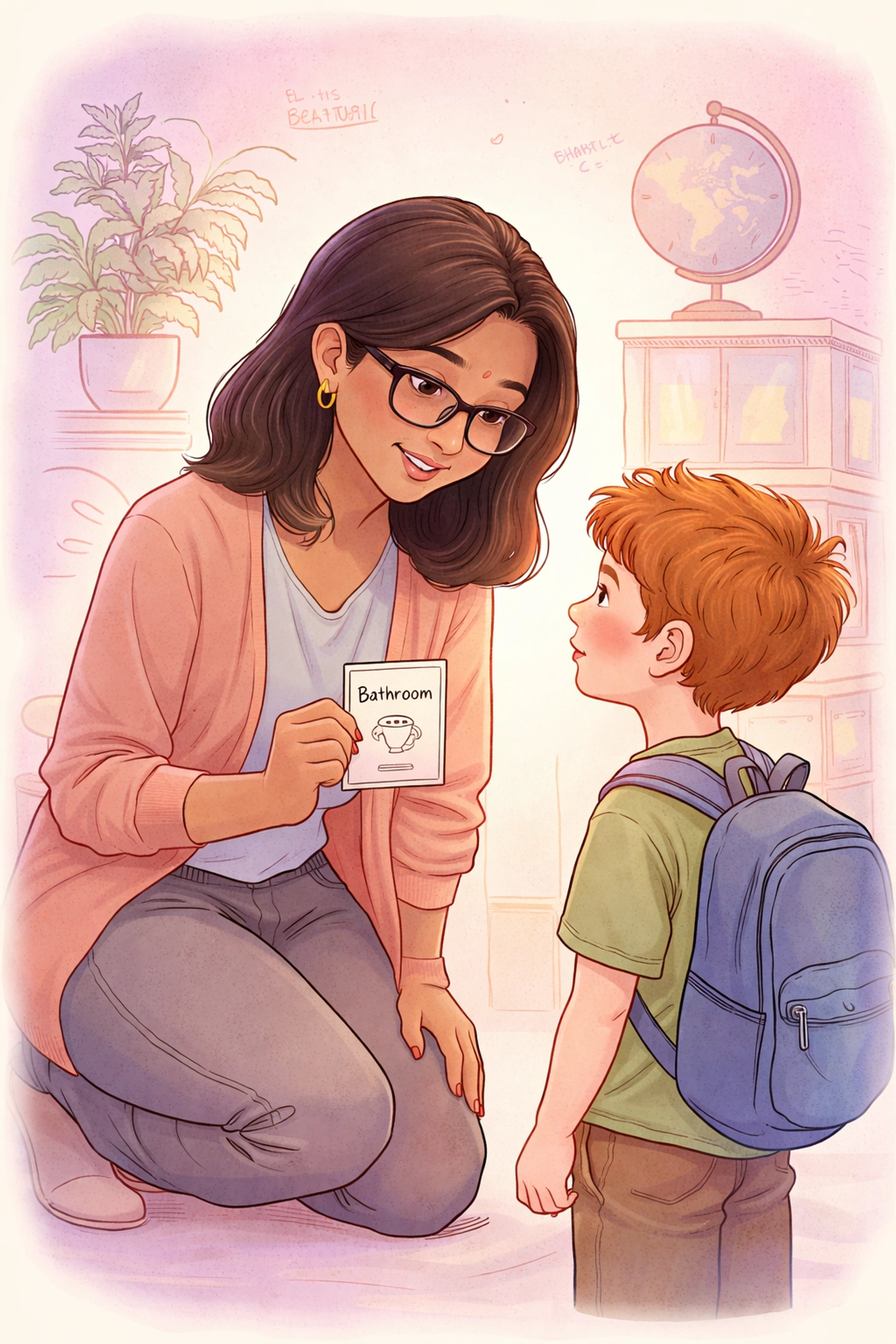
Work with your child's teacher to integrate these breaks naturally into the school day. Many kids respond well to a discreet signal, a special hand sign, a laminated bathroom pass on their desk, or a vibrating watch reminder.
The Bathroom Pass: Empowerment, Not Embarrassment
A dedicated bathroom pass removes the social friction of asking permission in front of peers. It gives your child agency and eliminates the fear of being told "no" or "wait."
Some schools offer medical bathroom passes that allow unlimited access. If your child's school doesn't have this system, request one. Frame it as a health accommodation, not a special privilege.
Playtime Hacks: Staying Dry Without Missing the Fun
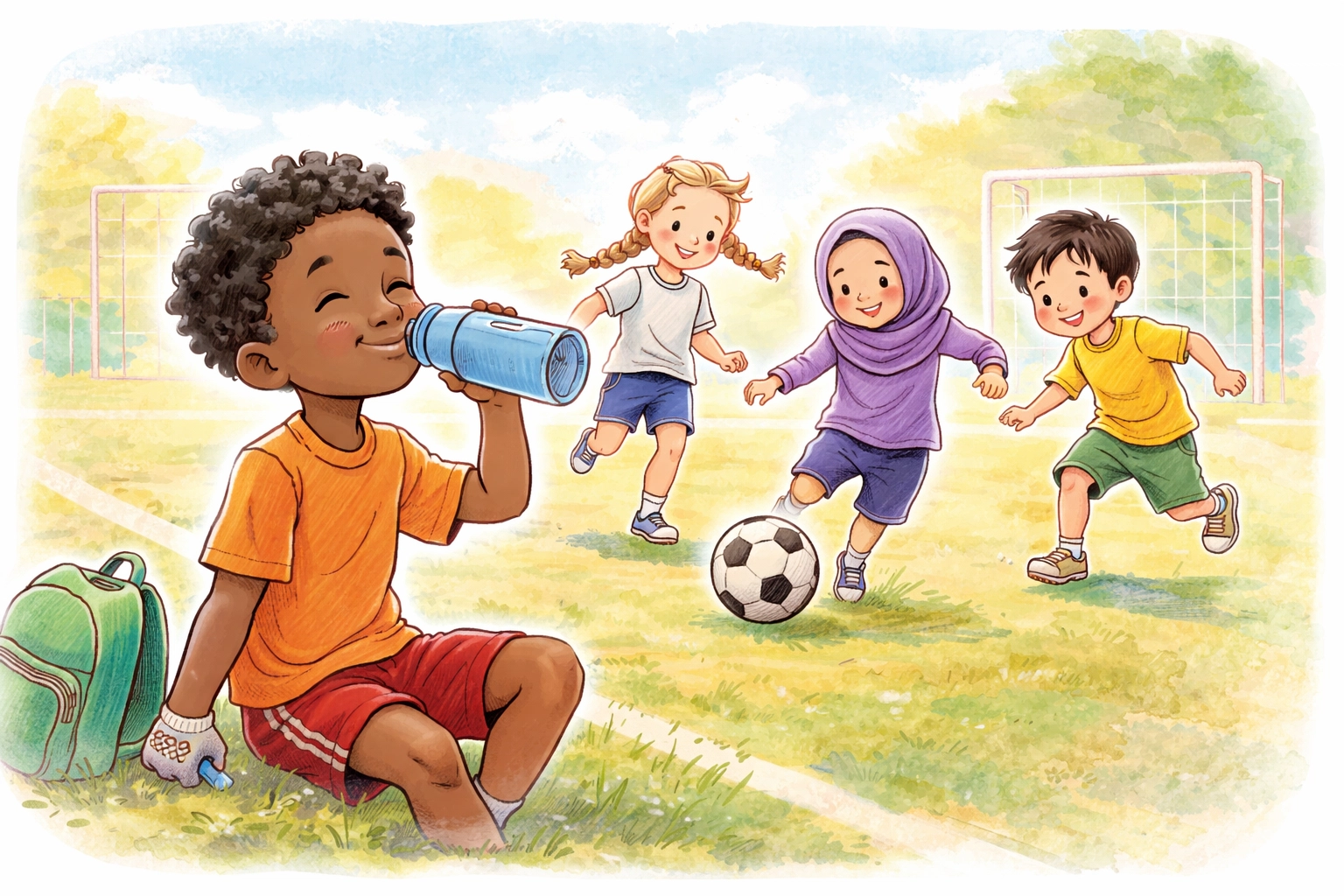
Recess. Birthday parties. Playdates. Soccer practice. These are the moments kids live for: and the moments when bathroom breaks feel most disruptive.
The key is making bathroom breaks feel like part of the fun, not an interruption of it.
The "Pit Stop" Reframe
Race car drivers take pit stops. Astronauts take equipment checks. Superheroes recharge their powers. Help your child see bathroom breaks as strategic pauses that keep them performing at their best.
Try language like:
- "Time for a quick pit stop so you can keep crushing it out there!"
- "Let's do a power recharge: bathroom, water, then back to the game!"
- "Even [favorite athlete/character] takes breaks. That's what champions do."
The Buddy System
If your child resists leaving a playdate or party for the bathroom, recruit a buddy. A trusted friend who goes with them transforms the bathroom break from a solo exile into a quick adventure.
Pre-Activity Voiding
Make bathroom trips a non-negotiable part of transitions:
- Before leaving for the park
- Before the playdate starts
- At halftime of any sport or activity
- Before getting in the car
When it's just "what we do," it stops feeling like a punishment.
Pelvic Floor Power: Simple "Breathe and Relax" Drills
Here's where we get to the really exciting stuff: helping your child build body awareness and bladder control from the inside out.
The pelvic floor is a hammock of muscles at the base of the pelvis. These muscles control urination, bowel movements, and core stability. In kids with daytime wetting, these muscles are often either too tight (from chronic holding) or too weak (from never learning to engage them properly).
The good news? We can train them. And we can make it fun.
The "Balloon Belly" Breath
This foundational exercise teaches diaphragmatic breathing, which naturally relaxes the pelvic floor and helps kids tune into their bodies.
How to do it:
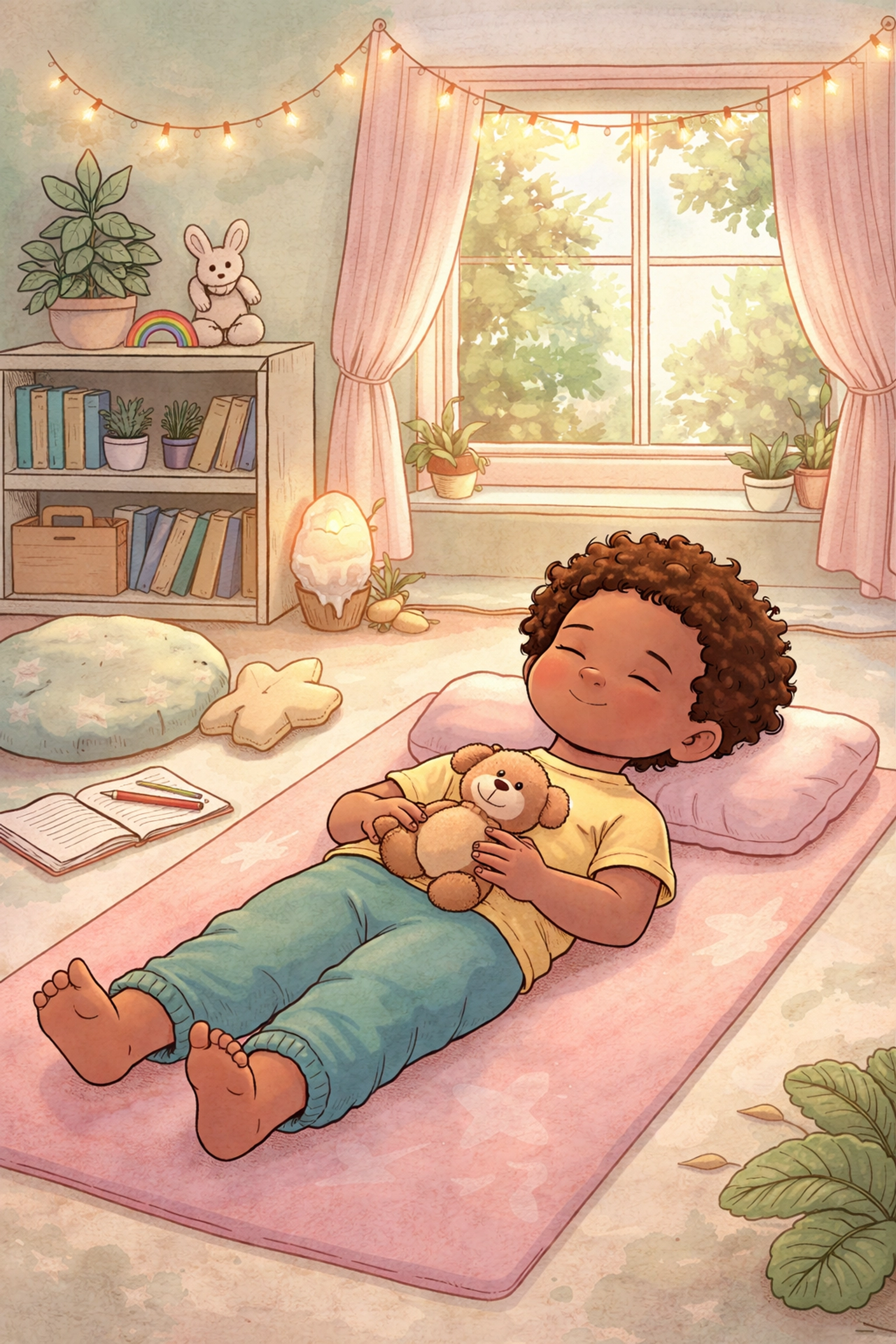
- Have your child lie on their back with knees bent, or sit comfortably
- Place a small stuffed animal on their belly
- Instruct them to breathe in slowly through their nose, making the stuffed animal rise (belly expands like a balloon)
- Exhale slowly through their mouth, letting the stuffed animal sink down
- Repeat 5-10 times
Why it works: Deep belly breathing activates the parasympathetic nervous system (rest and digest mode) and coordinates with the pelvic floor's natural rhythm. Inhale = pelvic floor gently relaxes. Exhale = pelvic floor gently engages.
The "Squeeze and Release" Game
This exercise builds awareness of the pelvic floor muscles: the same muscles that stop the flow of urine.
How to do it:
- Have your child imagine they're trying to hold in gas or stop peeing mid-stream (don't actually practice this while urinating!)
- Squeeze those muscles for 3-5 seconds
- Fully release and relax for 5-10 seconds
- Repeat 5-10 times
Make it playful: Use imagery like "squeeze the blueberry" (gentle hold) or "elevator going up... and down" to keep it engaging.
TheraPlay Integration: Making Pelvic Floor Work Fun
At Bladder Breakthrough, we've built these exercises into our EduPlay gaming system: because kids learn best when they're having fun. Through interactive games and guided activities, children practice body awareness, hydration tracking, and pelvic floor engagement without even realizing they're doing "therapy."
> Power Line: "We aren't just dry; we are confident and connected to our bodies."
This is the ultimate goal. Not just preventing accidents, but raising children who understand their bodies, trust their signals, and feel empowered to take care of themselves.
When to Seek Additional Help
While most daytime wetting resolves with consistent strategies, some situations warrant a visit to your pediatrician or a pediatric pelvic floor specialist:
- Daytime wetting that persists beyond age 6-7 despite consistent intervention
- Pain or burning with urination (possible UTI)
- Sudden onset of wetting in a previously dry child (could indicate infection, stress, or other medical cause)
- Wetting accompanied by constipation that doesn't respond to dietary changes
- Signs of structural or neurological concerns (rare, but worth ruling out)
Don't hesitate to advocate for your child. You know them best, and early intervention leads to faster, more complete resolution.
Frequently Asked Questions: Your Guide to Daytime Wetting
Why does my child have daytime accidents?
Daytime accidents in children typically result from a combination of factors: overactive bladder (sudden, urgent signals), holding behaviors (ignoring the urge to go during play or school), and constipation (stool pressing on the bladder). It's rarely about willpower or defiance: it's about developmental coordination between the bladder, brain, and bowel that hasn't fully matured yet. Addressing all three factors together yields the best results.
How to stop daytime wetting in 7-year-olds?
For a 7-year-old experiencing daytime wetting, start with these evidence-based strategies:
- Rule out constipation – Increase fiber and water intake
- Implement scheduled voiding – Bathroom breaks every 2 hours, regardless of urge
- Address hydration timing – Front-load fluids earlier in the day
- Teach pelvic floor awareness – Simple breathing and squeeze/release exercises
- Communicate with school – Ensure bathroom access and reduce performance anxiety
- Consider professional support – A pediatric pelvic floor therapist can provide targeted guidance
What exercises help child daytime accidents?
Pediatric pelvic floor exercises focus on building awareness and coordination of the muscles that control urination. Key exercises include:
- Diaphragmatic breathing ("Balloon Belly") to relax the pelvic floor
- Quick flicks – Short, fast squeezes of the pelvic floor muscles
- Sustained holds – 3-5 second squeezes followed by full relaxation
- Coordination drills – Linking breath with pelvic floor engagement
These exercises work best when practiced daily and integrated into playful routines. Our Bladder Defender app gamifies these exercises to keep kids engaged.
Your Next Step: From Accidents to Achievements
Daytime wetting doesn't have to define your child's school experience, social life, or self-esteem. With the right understanding, strategies, and support, your child can move from accidents to achievements: from embarrassment to empowerment.
You've already taken the first step by reading this far. That tells me you're the kind of parent who shows up, who refuses to accept "just wait it out" as an answer, and who believes your child deserves better.
They do. And so do you.
Ready to take the next step? Explore our comprehensive course for families navigating pediatric incontinence, or discover how our gamified EduPlay system turns bladder training into something your child actually wants to do.
Because dry days aren't just possible( they're coming. 💪✨)