
How to Help Your Child With Daytime Accidents (Without the Power Struggle)
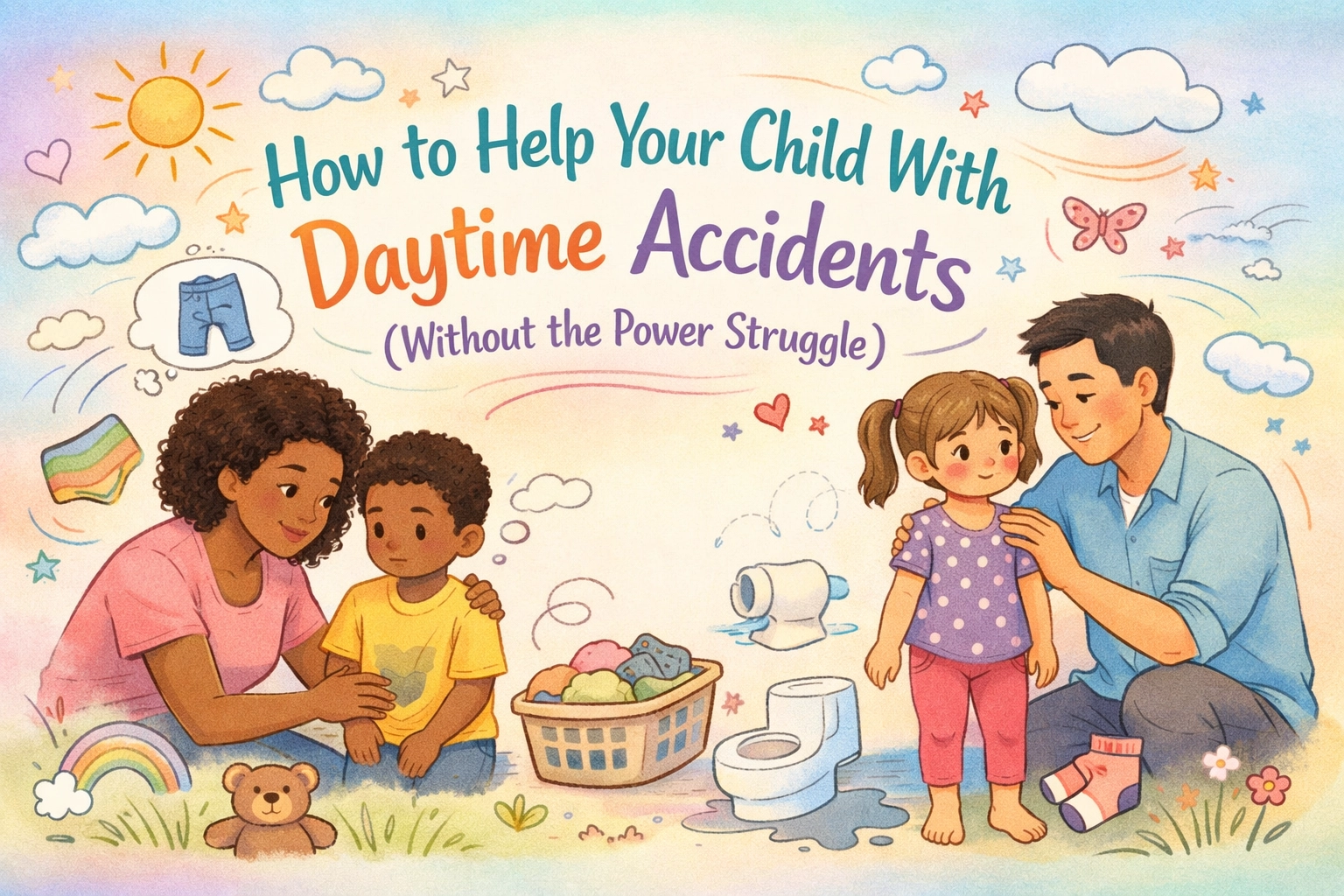
Let's be honest, few things test your patience quite like a child who's having daytime accidents. You've tried the rewards chart. You've asked, reminded, and pleaded. You've cleaned up more puddles than you care to count. And somewhere between the fourth load of laundry this week and another embarrassing moment at the playground, you might've wondered: Am I doing something wrong?
Here's what I want you to hear first: You're not failing. Your child isn't defiant. And this is fixable.
As a pediatric physical therapist who's specialized in bladder health for over a decade, I've seen hundreds of families trapped in the exhausting cycle of daytime wetting, and the power struggles that follow. The reminders that turn into nagging. The consequences that backfire. The tension that builds every single day.
But here's the truth that changes everything: daytime accidents in children are almost never about willpower, laziness, or attention-seeking. They're about physiology, development, and, most often, issues that are completely outside your child's conscious control.
Which means the solution isn't more pressure. It's more understanding.
Let me show you how to help your daytime wetting child without the battles, the frustration, or the shame that makes everything worse.
Why Power Struggles Make Daytime Wetting Worse (Not Better)
When you're dealing with urinary incontinence in children, your gut reaction might be to get stricter. More reminders. More consequences. More something to make them care enough to stay dry.
But here's what research tells us, and what I see play out every single day in clinical practice: stress is the enemy of bladder control.
When children feel anxious, ashamed, or pressured about their accidents, their nervous system goes into fight-or-flight mode. And guess what suffers? Their ability to recognize bladder signals, relax their pelvic floor, and fully empty when they do make it to the bathroom.
Stress is contagious. When you're stressed about your child's potty habits, your child picks up on that energy, and it creates a vicious cycle. They feel the pressure, which increases accidents, which increases your stress, which increases their anxiety... and round and round we go.
The breakthrough happens when you step out of that cycle entirely.

The Real Reasons Behind Daytime Accidents (Hint: It's Not Stubbornness)
Before we can solve the problem, we need to understand what's actually happening. Daytime accidents in toilet-trained children rarely happen because they're being defiant or "just don't care." Here are the most common culprits:
1. Constipation, The Silent Saboteur
This is the big one. Research shows that 70-80% of children with daytime wetting have underlying constipation, even when parents don't realize it. When the rectum is full of stool, it puts direct pressure on the bladder, reducing its capacity and making it harder to empty completely.
Think of it like this: your child's bladder and bowel share real estate in a pretty small space. When one tenant takes up too much room, the other one suffers.
Signs your child might be constipated (even if they poop daily):
- Hard, pebbly stools
- Painful bowel movements
- Stomach aches
- Going several days without pooping
- Large bowel movements that clog the toilet
2. Voiding Dysfunction
Some kids develop habits that interfere with normal bladder function, like holding pee for too long, rushing through bathroom trips, or not fully relaxing their pelvic floor muscles when they go. Over time, these patterns become automatic, creating a cycle of incomplete emptying and frequent accidents.
3. Overactive Bladder
Children with overactive bladder experience sudden, strong urges to pee that are hard to ignore. Their bladder muscle contracts when it shouldn't, giving them little warning before an accident happens.
4. Developmental & Attention Challenges
Kids with ADHD, autism spectrum disorder, or simply strong focus on activities may genuinely not notice their body's signals. They're not ignoring the urge, they're literally not processing it until it's too late.
5. "Too Busy to Pee" Syndrome
Sometimes the issue is simpler: your child is deeply engaged in play, doesn't want to stop, and waits until the last possible second, which becomes one second too late.
Understanding why accidents are happening helps you respond with empathy instead of frustration. And that shift? That's where the magic begins.
Building Your No-Pressure Game Plan: Practical Strategies That Actually Work
Alright, let's get tactical. Here's how to help your child with daytime accidents using strategies backed by research and proven in real families.
Strategy #1: Establish a Predictable Bathroom Schedule
One of the most effective tools for bladder training for kids is removing the need for decision-making altogether. Instead of asking "Do you need to go?" every twenty minutes (which turns into a power struggle), create a simple routine:
Set bathroom times every 2-3 hours, plus:
- First thing in the morning
- Before leaving the house
- Before meals
- Before bed
Frame it as non-negotiable, like brushing teeth, not a punishment, just what we do. "It's bathroom time" becomes as routine as "it's dinner time."
Pro tip: Use a vibrating watch or phone timer so reminders come from the device, not from you. This removes you from the nagging role and puts your child in the driver's seat.
Strategy #2: Watch for the "Potty Dance" (and Respond Without Judgment)
Does your child:
- Cross their legs?
- Bounce or wiggle?
- Hold themselves?
- Squat down repeatedly?
These are involuntary holding patterns, your child's body trying desperately to prevent leakage. When you see these signals, gently redirect: "Looks like it's bathroom time. Let's go together."
No interrogation. No frustration. Just matter-of-fact support.
Strategy #3: Master the Proper Toilet Position
This one's huge and often overlooked. Proper positioning makes a massive difference in how completely the bladder empties:
The golden rules:
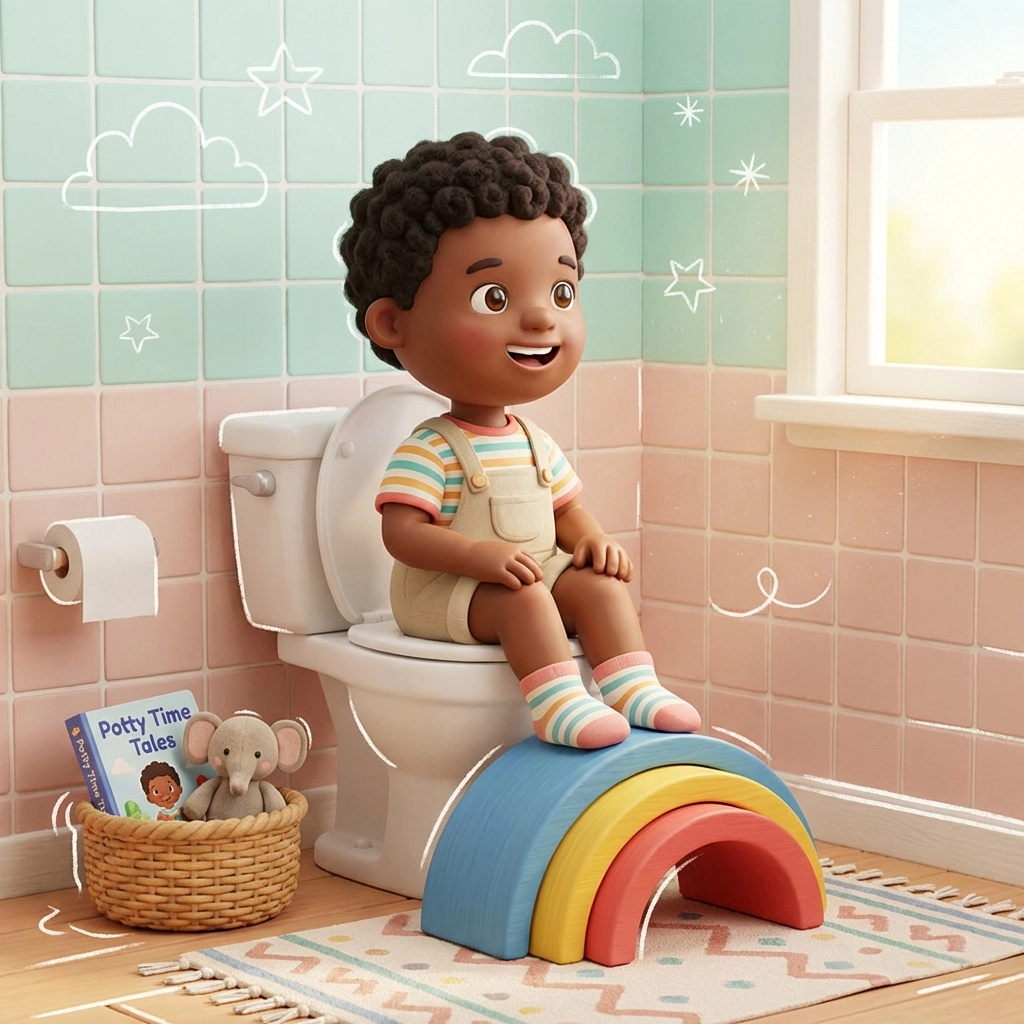
- Feet flat and fully supported (use a stool if needed)
- Knees slightly higher than hips
- Relaxed posture, no straining or rushing
- For boys: sitting may actually promote better relaxation than standing
Give your child permission to take their time. Bring a book, a small toy, or even a tablet to encourage relaxation. A tense child with dangling feet isn't going to empty their bladder completely, which sets them up for the next accident.
Strategy #4: Tackle Constipation Head-On
If constipation is part of the picture (and statistically, it probably is), addressing it is non-negotiable:
Dietary changes:
- Increase fruits and vegetables (especially prunes, pears, and berries)
- Add fiber-rich foods
- Increase water intake throughout the day
- Limit dairy if it seems to worsen constipation
Behavioral strategies:
- Encourage a post-meal bathroom sit (breakfast is ideal, the gastrocolic reflex naturally stimulates bowel movements)
- Make sure your child isn't rushing or holding
- Consider a pediatrician-recommended stool softener if diet alone isn't enough
Bladder and bowel health go hand in hand. You can't solve one without addressing the other.
Strategy #5: Use Positive Reinforcement (Not Punishment)
Shame and punishment don't teach bladder control, they teach fear and secrecy. Instead:
Celebrate the wins:
- Dry days earn stickers, high-fives, or small rewards
- Successful bathroom trips get verbal praise
- Track progress on a visual chart your child can see
Respond to accidents neutrally:
- "Oops, you had an accident. Let's get you cleaned up."
- Involve your child in the cleanup (age-appropriately) without making it punitive
- Remind them: "Your body is still learning. We'll keep practicing."
The goal is to make staying dry feel rewarding without making accidents feel catastrophic.

Creating a Shame-Free Environment (At Home and Beyond)
One of the most important things you can do is protect your child's emotional well-being while you work on the physical solution.
At Home:
Have open, shame-free conversations. Let your child know that:
- Lots of kids deal with this
- It's not their fault
- You're going to figure it out together
Normalize the process. Avoid making it a secret or treating it like a shameful family problem. When your child feels supported rather than scrutinized, their stress levels drop: and their progress speeds up.
At School:
Communicate with teachers. Request accommodations like:
- Unrestricted bathroom access (consider a doctor's note if needed)
- A discreet signal your child can use when they need to go
- A change of clothes kept in the nurse's office
Pack strategically. Send your child with:
- Dark-colored pants or patterned clothing that hides dampness
- Extra underwear and pants in a discreet bag
- Baby wipes for quick cleanup
Some families also use disposable underwear as a safety net during the transition: reducing anxiety about accidents can actually help them happen less frequently.
Special Considerations for Kids with ADHD, Autism, or Sensory Challenges
Children with neurodevelopmental differences often need tailored support. Here's what works:
For kids with ADHD:
- Use timers and alarms for bathroom reminders
- Create a visual bathroom schedule
- Offer extra positive reinforcement for staying on track
For kids with autism or sensory sensitivities:
- Address sensory issues around the bathroom (lighting, sounds, toilet seat texture)
- Use social stories to teach bathroom routines
- Keep the schedule highly predictable
Remember: These kids may not have been developmentally ready for potty training when it happened, or they may simply get so absorbed in activities that bladder signals don't register. This isn't defiance: it's wiring.
When to Seek Professional Help
Sometimes, despite your best efforts, you need expert support: and that's not a failure. Consider reaching out to a pediatric urologist or pelvic floor physical therapist if:
- Your child is older than 6-7 and still having frequent daytime accidents
- Constipation isn't improving with dietary changes
- You suspect an overactive bladder or other medical issue
- Accidents are impacting your child's self-esteem or social life
- You're feeling overwhelmed and need guidance
Professional assessment can:
- Rule out anatomical or neurological issues
- Provide targeted pelvic floor therapy
- Create a customized treatment plan
At Bladder Breakthrough, we specialize in exactly this: combining clinical expertise with compassionate, kid-friendly support. Our gamified approach makes bladder training for kids something they actually want to participate in, not something you have to force.
The Bottom Line: Progress Over Perfection
Here's what I want you to remember on the hard days:
Daytime accidents are not a character flaw. They're a sign that your child's body needs support, not punishment. When you approach the issue with curiosity instead of frustration: when you trade power struggles for partnership: everything changes.
You don't need to be perfect. You need to be patient, consistent, and willing to investigate the root causes. You need to celebrate small wins and respond to setbacks with compassion.
And on the days when it feels like you're drowning in wet pants and shattered patience? Give yourself grace. You're doing the hardest job in the world: and you're doing it with love.
Your child's bladder breakthrough is coming. Not because you forced it, but because you created the conditions for it to happen naturally.
And that? That's the real win.
References & Further Reading
- Cleveland Clinic. (2024). "Daytime Wetting in Children." Pediatric Health Resources. https://my.clevelandclinic.org/health/diseases/daytime-wetting-children
- American Academy of Pediatrics. (2023). "Voiding Dysfunction and Urinary Incontinence in Children." Pediatrics, 142(5), e20183410.
- Hodges, S.J., & Anthony, E.Y. (2012). "Occult Megarectum: A Commonly Unrecognized Cause of Enuresis." Urology, 79(2), 421-424.
- National Institute of Diabetes and Digestive and Kidney Diseases. (2023). "Bladder Control Problems in Children (Daytime Wetting)." https://www.niddk.nih.gov
- Franco, I. (2011). "Functional Bladder Problems in Children: Pathophysiology, Diagnosis, and Treatment." Pediatric Clinics of North America, 59(4), 783-817.
Ready to transform your child's bladder health journey? Explore our gamified programs designed to make bladder training something kids actually enjoy: or reach out for personalized support from our clinical team. Because every child deserves to feel confident, capable, and accident-free.