
Is Constipation Bad? What Parents Need to Know About the Link to Bedwetting in Children

If you’ve spent your mornings stripping wet sheets, oscillating between deep empathy for your child and pure, coffee-deprived exhaustion, you aren’t alone. You’ve likely tried the "no water after 7 PM" rule, the midnight bathroom wake-ups, and maybe even those loud bedwetting alarms that make everyone jump out of their skin. But what if I told you the "villain" behind the wet sheets isn’t actually the bladder at all?
What if the real culprit was hiding further down, in the bowels?
At Bladder Breakthrough, we see this every single day. Parents come to us asking, "Is constipation bad?" and "Does it really have anything to do with why my 8-year-old is still wetting the bed?" The answer is a resounding yes. In fact, chronic constipation is the #1 hidden cause of bedwetting in children.
Today, we’re going on a mission with the Stay Dry Squad to uncover the "Hidden Villain" (Constipation), understand the science behind the "Bladder-Bowel Connection," and show you how to help your little hero reclaim their dry nights.
The Secret Roommates: Why the Bladder and Bowels Are Best Friends (and Worst Enemies)
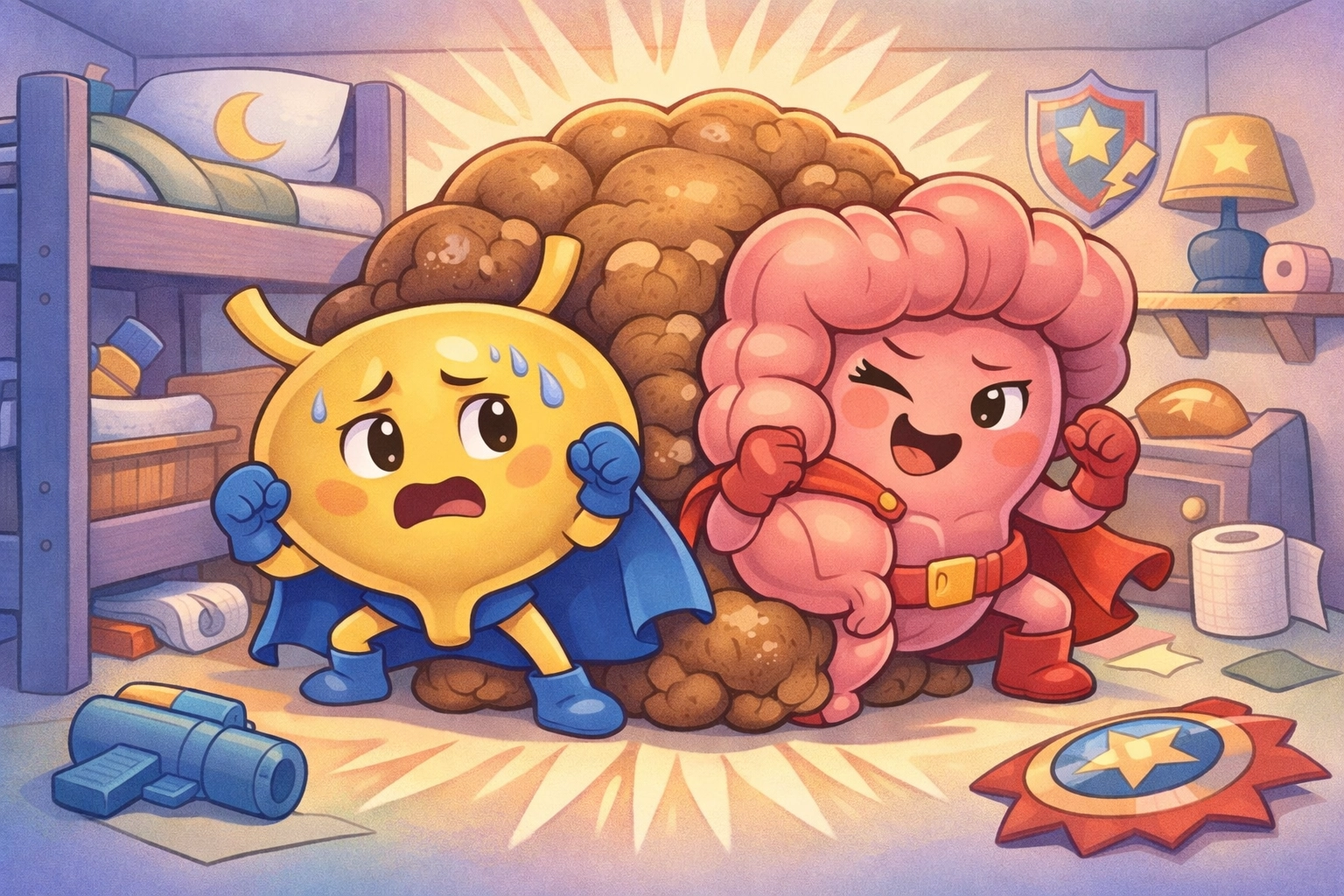
To understand why your child is struggling, we have to look at the "real estate" inside their pelvis. Think of the bladder and the rectum as two roommates sharing a very small, cramped apartment.
The bladder sits right in front of the rectum. When everything is working correctly, they both have plenty of room to expand and do their jobs. But when a child is constipated, the rectum becomes packed with old, hard stool.
The "Overcrowded Apartment" Effect
When the rectum stays full, it begins to stretch out. This stretched-out, heavy rectum starts pushing directly against the bladder. Imagine trying to fill up a balloon while someone is pressing their hand firmly against the side of it. The balloon can’t hold as much air, right?
That is exactly what happens to your child’s bladder. The pressure from the "Hidden Villain" (constipated stool) reduces the bladder’s capacity. It sends signals to the brain saying, "I’m full! I’ve gotta go!" even when there’s only a tiny bit of urine inside. During the day, your child might be able to rush to the bathroom. But at night? When their brain is in deep sleep mode? The bladder simply overflows because it has no "storage space" left.
The "Normal" Poop Trap: Why You Might Not Realize Your Child Is Constipated
One of the biggest hurdles we face as parents is the definition of constipation. Most of us think constipation means "not pooping for three days." But in the world of pediatric pelvic health, that’s a myth we need to bust right now.
A child can poop every single day and still be severely constipated.
This is what clinicians call "occult" or hidden constipation. Your child might be passing a small amount of stool daily, but they aren't emptying their rectum completely. Over time, that leftover stool builds up, hardens, and creates that "overcrowded apartment" we talked about.
Signs the "Hidden Villain" Is Afoot:
- Large Stools: If your child produces "adult-sized" poops that occasionally clog the toilet, that’s a red flag.
- Painful Bowel Movements: If they complain that it hurts or if you see them "stool withholding" (crossing their legs, hiding in a corner, or turning red while trying not to go).
- Small "Rabbit Pellets": Hard, lumpy stools are a sign of dehydration and slow transit time.
- Skid Marks: Believe it or not, "soiling" or skid marks in the underwear often mean there is a large mass of hard stool stuck, and liquid poop is leaking around it.
If your child is experiencing any of these and wetting the bed, it’s time to stop the guesswork and start the breakthrough. You can learn more about these "hidden" signs in our Fearless & Dry video series.
What the Science Says: The 83% Success Rate
I don’t want you to just take my word for it. Let’s look at the hard data. Research has shown a staggering link between treating the bowels and curing the bed.
In a landmark study conducted at Wake Forest Baptist Medical Center, researchers looked at 30 children who were seeking treatment for bedwetting. Using X-rays, they discovered that all 30 children had large amounts of stool in their rectums, even though most of the parents thought their kids had normal bowel habits.
The most incredible part? After treating the constipation with a specialized protocol, 83% of those children (25 out of 30) were completely cured of bedwetting within three months.
Think about that. No alarms, no expensive medications that side-track the nervous system, just clearing out the "Hidden Villain" and giving the bladder its space back. When we treat the root cause, the symptoms (the wet sheets) vanish. This is why we created the Bladder Breakthrough system, which integrates bowel health into every step of the journey.
The Emotional Toll: It’s Not Just About the Laundry
As a parent, the constant cycle of wet sheets, the smell of vinegar in the laundry room, and the look of defeat on your child’s face when they wake up wet can feel like a heavy weight.
Children between the ages of 4 and 12 are at a critical stage of development. They want to go to sleepovers, they want to go to summer camp, and they want to feel like a "big kid." Bedwetting (Nocturnal Enuresis) can lead to:
- Low self-esteem and "shame spirals"
- Anxiety about sleeping away from home
- Frustration within the family dynamic
It is vital to remember: Your child is not doing this on purpose, and it is not a behavioral flaw. It is a physical coordination issue between the bladder, the bowels, and the brain. Our goal at Elevacare is to turn these accidents into achievements by making the process fun and heroic.

How to Level Up: Defeating the Hidden Villain
Ready to take action? Here is the Stay Dry Squad's tactical guide to clearing the bowels and supporting the bladder.
1. Hydrate Like a Hero
It sounds counterintuitive, give them more water to stop bedwetting? Yes! Dehydration is a leading cause of constipation. When the body is dehydrated, the colon sucks all the water out of the stool to keep the organs running, leaving the poop hard, dry, and stuck.
Check out our guide on why hydration is the unsung hero to get the "Sip, Track, Shine" routine down.
2. Fiber is Your Superpower
Focus on the "P" fruits: Pears, Plums, Peaches, and Prunes. These are natural "bowel movers." Aim for a diet rich in colorful vegetables and whole grains to keep things moving through the "transit tunnel."
3. The "Power Poop" Position
Did you know that most toilets are designed for adults, not kids? When a child sits on a standard toilet, their feet dangle. This causes the pelvic floor muscles to tighten up to keep them from falling in. To poop effectively, the pelvic floor needs to relax.
- The Fix: Use a stool (like a Squatty Potty or a simple step stool) so your child's knees are higher than their hips. This mimics the natural squatting position and "unlocks" the rectum.
4. Gamify the Journey
Kids don't want to talk about "rectal distension", they want to play! This is where the Stay-Dri EduPlay Bladder Defender™ app comes in. We turn pelvic health exercises and bowel tracking into a game where they earn rewards for being a "Bladder Hero."
Q&A Insights: Your Questions Answered
In the world of modern parenting, we know you’re searching for answers. Here are the most common questions regarding constipation and bedwetting answered by our clinical team.
Is it normal for a 7-year-old to wet the bed if they are constipated?
Yes, it is extremely common. Clinical data suggests that if a 7-year-old is constipated, the likelihood of nighttime accidents increases significantly. The pressure from the stool reduces bladder capacity, making it impossible for the child to hold urine through the night. Treating the constipation is often the first and most successful step in resolving the issue.
How do I know if my child is "hidden" constipated?
Look for "Ghost Poops" (smearing in the underwear), very large stools that clog the toilet, or a belly that feels hard or bloated. Even if they go every day, if the stool is hard (like "marbles") or they have to strain, they are likely constipated. An abdominal X-ray (KUB) from a pediatrician can confirm if the rectum is enlarged.
Can constipation cause daytime accidents too?
Absolutely. This is often called "Urge Incontinence." When the rectum pushes on the bladder, it causes the bladder to contract suddenly. This gives the child that "I have to go NOW!" feeling, often leading to leaking before they can reach the bathroom. For more help with daytime struggles, visit The Game Zone.
The Bladder Breakthrough Method: A Proactive Solution
We don’t believe in "waiting for them to outgrow it." While it’s true that some kids eventually stop wetting the bed, the emotional cost of waiting can be high. Moreover, if chronic constipation isn't addressed, it can lead to long-term pelvic floor dysfunction.
Our approach isn't a "patch": it's a transformation. We combine:
- Digital Therapy: High-engagement gaming that teaches kids to listen to their bodies.
- Clinical Expertise: Science-backed protocols developed by Dr. Tiffani S. Bacon, PT.
- Family Support: Tools that remove the shame and replace it with a plan of action.
If you’re ready to stop the "Hidden Villain" and start the celebration, we invite you to join the 5-Day Bladder Breakthrough Challenge. It’s the first step toward reclaiming your nights and your child’s confidence.

Final Thoughts: You’ve Got This, Hero!
Parenting a child with bedwetting and constipation can feel like a lonely journey, but it doesn’t have to be. You are doing a great job, and the fact that you’re here researching solutions shows how much you care.
Remember:
- Check the Bowels: Treat the "Hidden Villain" first.
- Use the Right Tools: Squatty stools and hydration are your best friends.
- Stay Positive: Keep the vibe heroic and blameless.
The Stay Dry Squad is standing by to help you level up. Let’s turn those wet mornings into "Victory Mornings."
Ready to see a change? Explore the Stay-Dri EduPlay System today!
References & Further Reading
- Hodges, S. J., & Anthony, E. Y. (2012). Occult constipation: a common cause of enuresis and urgency. Journal of Urology, 187(4), 1393–1397. Source
- Burgers, R., et al. (2010). Management of comorbid disorders in children with nocturnal enuresis. Nature Reviews Urology, 7(3), 127-135.
- Taiwan Population-Based Study (2015). The association between constipation and nocturnal enuresis in children. Journal of Pediatric Gastroenterology and Nutrition.
- Bladder Breakthrough Legal & Privacy: Review our clinical guidelines and terms.
- Theraplay & Pelvic Health: How playful support empowers kids.
- The Ultimate Survival Guide: Gamified help to stop bedwetting.