
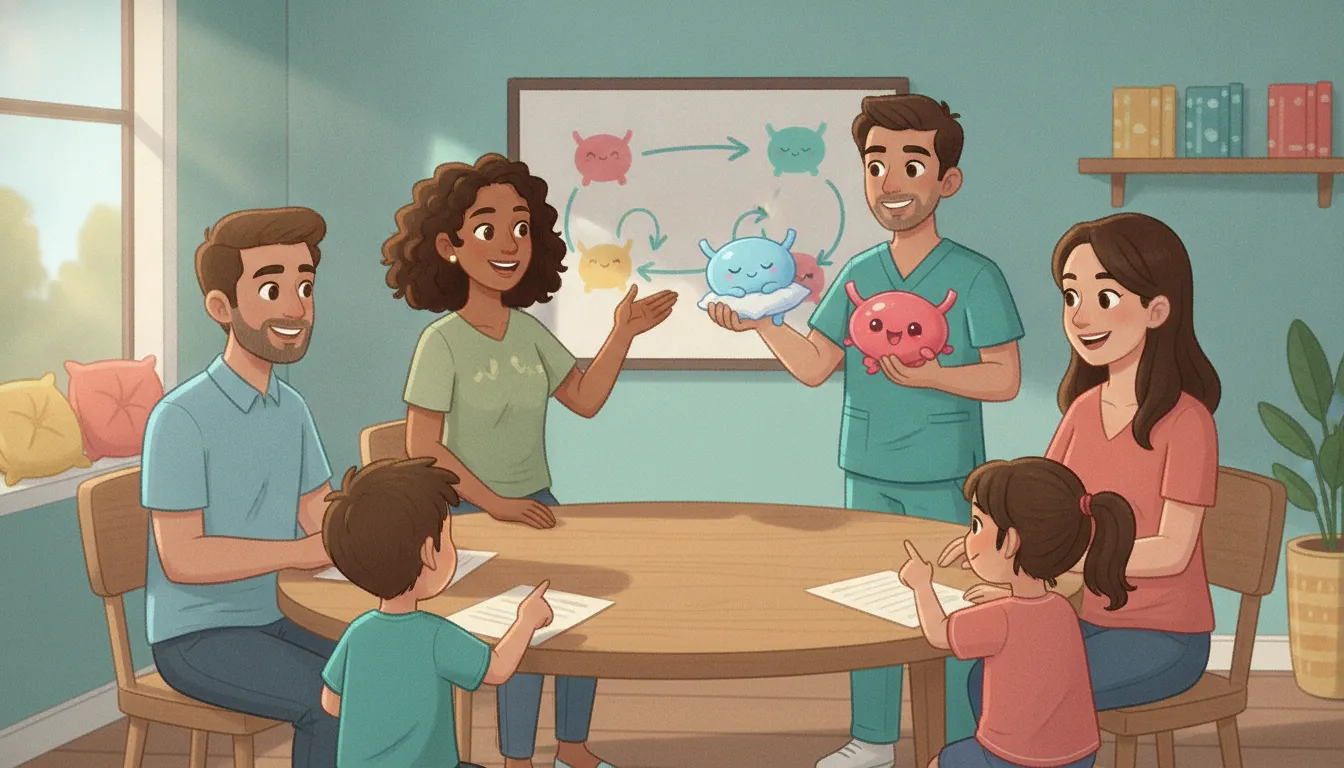
A pediatric continence program for PT clinics can extend the family education and pelvic-health support your team already provides. It does not assume that every clinic needs to hire more staff. The practical starting point is a bounded model: define what your clinic can support, give families clear educational touchpoints, and keep clinical judgment and referral decisions with qualified professionals.
Explore pediatric continence clinic licensing or call Bladder Breakthrough at +18332108585.
A pediatric continence program for PT clinics works best when it combines structured family education, practical routines, progress-oriented tools, and clear referral boundaries. It should support your existing care model rather than replace clinic-specific evaluation or medical care.
Physical therapy may already include exercise, posture work, and family education for pelvic health, while pediatric continence education also calls for recognizing red flags and knowing when to refer to a medical doctor. With those boundaries established, the next question is what this kind of program can add to your clinic and to the families you serve.
What a pediatric continence program can add to a PT clinic
A pediatric continence program can give a PT clinic a defined way to support bladder and bowel education alongside its existing services. The value is not a broad promise to solve every continence concern. It is a clear pathway that helps families understand routines, gives staff shared educational language, and makes referral boundaries easier to recognize.
A bounded model might include a family intake conversation, age-appropriate education about bathroom routines and toileting posture, optional tracking tools, and simple home practice that fits the child's plan and family context. It can also address the connection between bowel habits and bladder concerns without reducing the child's experience to a single symptom. Research describing interdisciplinary pediatric therapy has included digestive education, bathroom training, hygiene, and emotional regulation as related areas of support.
That differs from treating a clinic definition as a complete clinical answer. The clinic retains responsibility for its own evaluation, clinical judgment, documentation, and decisions about medical referral. Education should help staff notice when a concern falls outside the program's scope. A pediatric continence education curriculum, for example, includes recognizing red flags and knowing when to refer to a medical doctor.
For a clinic leader, the practical question is where the model belongs in the workflow. It might begin as a consistent education pathway for appropriate families, with one or two trained team members coordinating materials and escalation steps. It still requires planning and capacity review; licensing does not mean zero added work. Explore pediatric continence clinic licensing as one option for structuring that education and referral model.
How to build the program around existing clinic capacity
A small pilot works best when it fits the clinic's current rhythm rather than creating a second, disconnected service line. The goal is to give families a clear educational pathway, define what the PT team can support, and make referral decisions visible. A published case series also describes an interdisciplinary occupational- and physical-therapy approach for pediatric constipation and fecal incontinence, reinforcing the value of coordinated roles when bowel and bladder concerns overlap. Read the case series on PubMed.
- Define the pilot's scope. Choose the age range, visit types, concerns the team is prepared to address through education and wellness support, and the number of families the clinic can reasonably onboard. Keep the first version narrow. Write down what is outside the pilot so staff do not have to make a new boundary decision during every visit.
- Map roles before inviting families. Name the clinical lead, the person responsible for family education, the staff member who maintains resources, and the owner of referral follow-up. A simple role map prevents the program from depending on one enthusiastic clinician. It also makes room for collaboration when a child's needs involve more than one discipline.
- Add one consistent intake and education touchpoint. Use a short intake process that captures the family's goals, relevant routines, and questions. A bladder diary can be one optional tracking tool; pediatric continence training materials specifically include bladder-diary work as part of the learning process. See the curriculum reference. Pair intake with a brief, repeatable education conversation so families hear the same core guidance regardless of who starts the process.
- Establish referral rules. Create a written escalation pathway for red flags, findings outside the clinic's scope, or situations requiring medical input. Pediatric continence education emphasizes recognizing red flags and knowing when to refer, while referral decisions should remain grounded in the treating team's clinical judgment. Review the referral-focused objectives.
- Review capacity before expanding. Set a regular checkpoint to examine appointment load, staff questions, family follow-through, referral handoffs, and documentation time. One pediatric case series measured progress through a therapy plan of care and updates every 60 days. View the progress-tracking approach. Use your own observations to decide whether to refine, pause, or expand the pilot. Licensing or educational resources can support a workflow, but they do not remove the need for staffing, judgment, and review.
Which routines and education belong in the model
A useful program gives families a practical structure they can understand and repeat at home. The routine layer may include hydration habits, comfortable bathroom timing, and toileting posture that supports relaxed, functional bathroom use. These are education topics, not promises of a particular clinical outcome. A clinic should apply its own clinical judgment when deciding what is appropriate for each child.
The bowel and bladder systems also belong in the same conversation. Education can help caregivers notice why constipation and bladder concerns may overlap, without blaming a child for either experience. Family language should be calm and matter-of-fact: describe the routine, invite questions, and avoid framing accidents as laziness or failure. A short explanation of digestive anatomy, hygiene, and emotional regulation can make the plan easier for children and caregivers to follow. A pediatric pelvic-floor education curriculum likewise identifies diet, bladder-health education, toileting posture, and pelvic-floor relaxation as relevant learning topics. Learn more about the curriculum topics.
Make learning active and age-appropriate
Play-based learning can turn abstract ideas into manageable practice. A child might use a game, story, movement activity, or simple home exercise to explore body signals and routines. The goal is not to make light of a sensitive concern. It is to create a lower-pressure way for children ages 4 to 12 to participate, ask questions, and build confidence. Clinician-designed educational tools can support that process while keeping medical decisions and referrals within the clinic's role.
Track participation and progress without pressure
Progress tracking should focus on useful observations and agreed goals, such as routine participation, bathroom skills, comfort, or questions raised by the family. One published pediatric physical therapy case series used a therapy plan of care and progress updates every 60 days, with goals that included digestive-system education, functional bathroom training, emotional regulation, and hygiene. Review the case-series details. Clinics can also direct families to pediatric bladder education resources and explore family bladder health education programs as part of a broader, supportive learning model.
How should staff handle referrals and clinical boundaries?
A pediatric continence program for PT clinics should make role boundaries visible before the first family visit. Education can cover bladder and bowel routines, hydration and bathroom timing, posture, body awareness, caregiver communication, and practical ways to track patterns. It can also help staff use respectful language. Bed-wetting is unintentional urination during sleep, and Mayo Clinic notes that it is not a sign of toilet-training problems. That framing can reduce shame while keeping the conversation focused on support. Mayo Clinic explains bed-wetting and common reasons families seek guidance.
Separate education from clinical judgment
Clinic clinicians remain responsible for assessment, interpretation, documentation, and decisions about the appropriate plan of care. A resource or digital activity may reinforce learning and family routines, but it should not be presented as a diagnosis, treatment, cure, or substitute for individualized clinical judgment. Staff should also use consistent terminology and know which questions require a medical workup or another professional's input. Pediatric continence education commonly includes recognizing red flags, understanding referral needs, and identifying when assessment findings warrant escalation.
Use a simple escalation pathway
Define who reviews concerns, what gets documented, and when the family is directed to a physician or another qualified provider. Escalation may be appropriate when symptoms are new, worsening, unusual, outside the clinic's scope, or accompanied by concerns the clinician cannot safely interpret. Keep the threshold and handoff process clinic-specific rather than relying on a generic app or script. Bladder and bowel concerns can overlap, so the pathway should allow the team to consider the whole-child picture. Published work has also examined interdisciplinary occupational- and physical-therapy approaches for pediatric constipation and fecal incontinence, reinforcing the value of coordinated care without making the program's own outcome claims.
A practical comparison of program models for pediatric PT clinics
The right model depends on how much ownership your clinic wants to take and how clearly the team can define its boundaries. A sound pediatric continence program for PT clinics can begin with education and referral workflows, then expand only when the clinic has the training, coordination, and family touchpoints to support a broader pathway.
| Model | Staff ownership | Family touchpoints | Referral readiness | Questions to ask |
|---|---|---|---|---|
| Referral-only education | Staff recognize concerns, share basic education, and document next-step guidance. | One focused conversation, resource handoff, and follow-up direction. | Clear escalation criteria and a current list of appropriate medical contacts. | What concerns are in scope? Who explains red flags? Where do families go next? |
| Embedded education pathway | A designated clinician integrates routines, family education, and tracking into existing care. | Intake, home-practice coaching, bladder diary review, and planned check-ins. | Defined documentation and referral points when findings or symptoms require medical review. | Who owns intake? How will bowel and bladder factors be discussed? When is referral triggered? |
| Broader clinic program | A coordinated team provides a consistent pathway across evaluation, education, and follow-up. | Structured family onboarding, education resources, progress conversations, and care coordination. | Referral criteria, communication procedures, and role boundaries are documented across the team. | What training is needed? How are cases coordinated? Which families need another level of care? |
Whichever model you choose, keep the whole child in view. Relevant education may include posture, family routines, bowel and bladder relationships, and tracking tools such as a bladder diary. Training resources also emphasize recognizing red flags and identifying referral needs, including when assessment findings warrant medical input (pediatric continence education objectives). An interdisciplinary case series likewise describes occupational- and physical-therapy collaboration around pediatric constipation and fecal incontinence (published case series).
For clinics exploring a supported implementation path, review the options for pediatric continence clinic licensing. The practical next step is to choose the smallest model your current workflow can deliver consistently, then define the education, documentation, and referral responsibilities before expanding.
How to measure whether the program is helping families and the clinic
A useful review focuses on whether the program is being delivered clearly and consistently, not on promising a particular clinical result. Set a short review period and ask what families actually received, what staff needed, and where the workflow became unclear.
Track the family experience
- Education touchpoints: Record whether families received the planned explanations, home-practice guidance, and age-appropriate resources. A published pediatric therapy case series included education about digestive anatomy and physiology, along with bathroom training, hygiene, and emotional regulation. These topics can help a clinic check whether its education is addressing the whole family experience, rather than focusing on symptoms alone.
- Questions and follow-up: Note the questions caregivers and children ask, whether follow-up happened when expected, and which instructions needed clarification. Repeated questions may identify a handout, script, or teaching step that needs revision.
- Referral clarity: Ask whether staff know when a concern falls outside the educational program and how to communicate the next step. Keep this separate from measuring family outcomes.
Review the clinic workflow
Invite participating staff to comment on role clarity, documentation, scheduling, and the time required for each touchpoint. A case series used a therapy plan of care with progress updates every 60 days, but that cadence is not a universal benchmark. Use the clinic's own review cycle and clinical judgment instead.
For a practical example of family-friendly education, consider the play-based bladder learning tool. Review whether it is easy to explain, appropriate for the family, and aligned with the clinic's boundaries. Revisit the measures after each cycle and improve the process based on documented feedback.
When is a pediatric continence program for PT clinics ready to expand?
Expansion makes sense when the clinic can describe the program clearly and deliver it consistently. Start with a bounded scope: define the age range, concerns the team is prepared to address, and what remains outside the clinic's role. A written scope helps families understand what to expect and gives clinicians a shared starting point.
Use a readiness checklist
- Assign ownership. Name the clinician responsible for intake, family education, documentation, and follow-up. Make sure every team member knows where questions go.
- Set referral boundaries. Build a simple process for recognizing red flags and referring to a medical doctor when appropriate. Pediatric continence education commonly includes referral decisions as part of safe program planning (see this curriculum's stated objectives).
- Prepare family materials. Use plain-language guidance for routines, bladder and bowel observations, and questions families can bring to their healthcare team. A bladder diary can create a consistent starting point for conversations and follow-up.
- Plan progression and review. Decide how the clinic will document the starting plan, check progress, and adjust education over time. A published pediatric case series used therapy plans of care and progress updates as part of its tracking approach, offering one example to discuss when designing internal workflows (PubMed).
- Review capacity honestly. Look at appointment availability, documentation time, staff comfort, and the volume of referrals the clinic can responsibly support. If the model is not sustainable at its proposed size, begin with a smaller pilot rather than overextending the team.
Once these pieces are defined, clinic leaders can evaluate whether optional licensing would add useful educational structure and family resources. Explore pediatric continence clinic licensing alongside relevant tools such as TheraPlay at Home, then compare the materials with the clinic's scope, referral process, and capacity before deciding.
Frequently Asked Questions
Is there such a thing as a pediatric physical therapist?
Yes. Pediatric physical therapists work with children and families on movement, function, routines, and education. A clinic adding continence-focused support should define which activities fit its clinicians' training and scope, then establish a clear process for questions that require medical evaluation.
Does physical therapy help with incontinence?
Physical therapy may support children through relevant education, routines, posture work, and family guidance, depending on the child's needs and the clinician's assessment. It should not be presented as a guaranteed result. A pediatric continence program can give staff a consistent educational framework while leaving clinical decisions with the treating team.
How does a clinic know when to refer a child?
Referral boundaries should be set before the program launches. Staff can document concerning symptoms, review assessment findings within their scope, and refer when medical red flags or needs beyond the clinic's role arise. Pediatric continence education commonly includes recognizing red flags and identifying referral needs. Keep those decisions with the treating team.
Can a pediatric PT clinic use educational resources without diagnosing?
Yes. Educational resources can support conversations about bladder routines, bowel and bladder context, toileting, and family questions. They do not replace clinical judgment, medical care, or a child-specific evaluation. For example, bed-wetting is defined as passing urine unintentionally while asleep, and families may need individualized guidance rather than a one-size-fits-all explanation (Mayo Clinic, bed-wetting overview).
Will insurance cover a continence education program?
Coverage depends on the specific service, payer, plan, documentation, and local requirements. Clinics should not promise coverage based on the program name alone. Before launch, confirm how the clinic will describe educational resources, clinical services, referrals, and any billing questions, and direct families to their insurer for coverage details.
Ready to Explore Pediatric Continence Clinic Licensing?
A practical educational program model can help your clinic define staff roles, family touchpoints, and referral boundaries before expanding the offering. Explore pediatric continence clinic licensing for your PT clinic, then call Bladder Breakthrough at +18332108585 to talk through the model and your questions.