
Pediatric Pelvic Floor Exercises 101: A Beginner’s Guide to Mastering Muscle Power
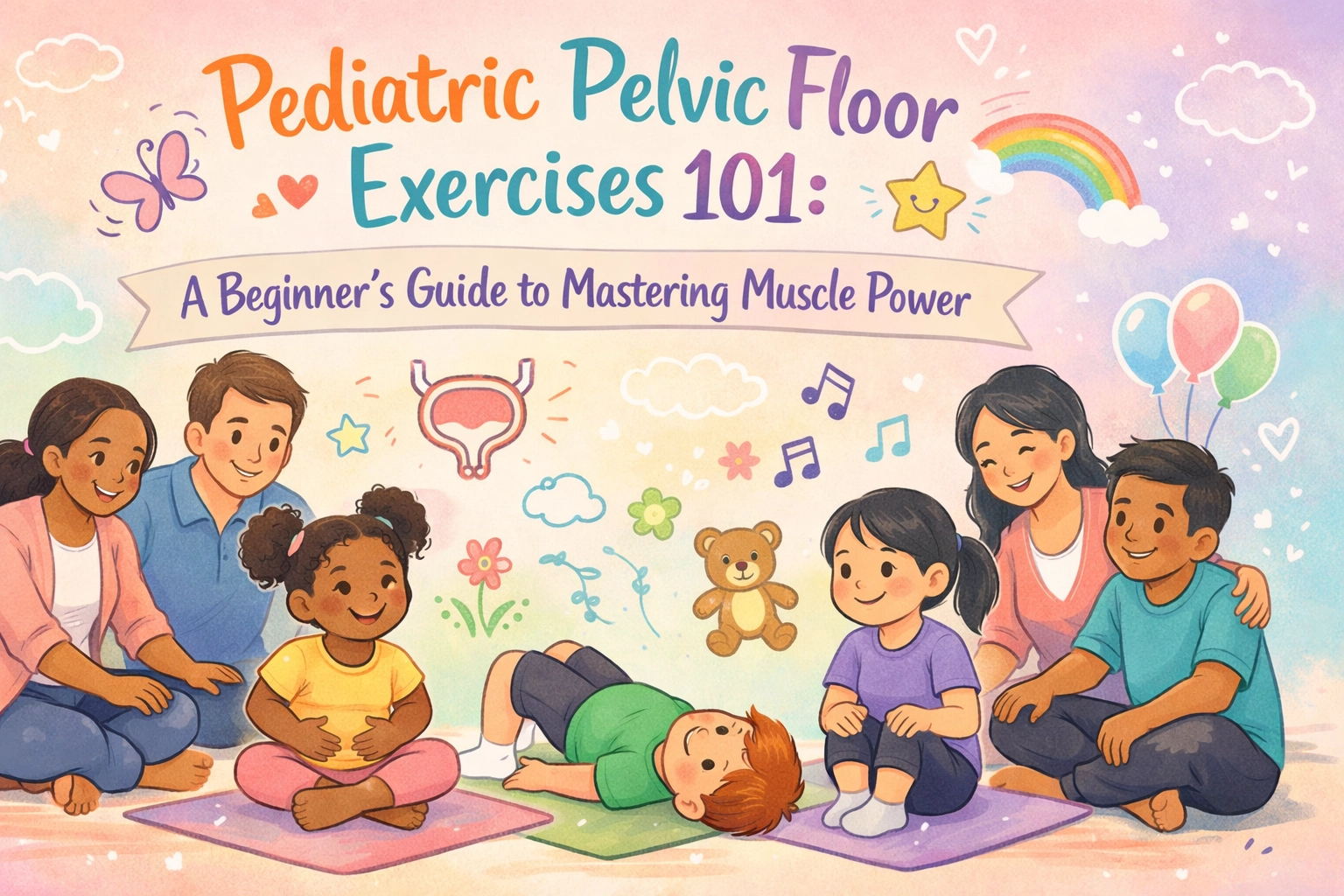
Hey there, Super-Parent! 🦸♀️
If you’re reading this, chances are you’ve spent more time in the laundry room lately than you’d care to admit. Maybe you’ve got a "Laundry Mountain" that could rival Everest, or perhaps you’re tired of the "pee-check" dance every time you leave the house. We get it. The frustration, the exhaustion, and that heavy feeling in your chest when you see your child’s face after another "oopsie", it’s a lot to carry.
But here is the good news: you are not alone, and your child isn’t "broken." They just haven't mastered their secret internal superpowers yet!
At Bladder Breakthrough, we don’t believe in "waiting for them to outgrow it." We believe in training. We believe in empowerment. And most importantly, we believe in turning a clinical struggle into a heroic adventure. Today, we’re diving into the world of pediatric pelvic floor exercises, the ultimate "Muscle Power" training for your little hero.
Grab a coffee (or a glass of water, stay hydrated!), and let’s meet the Stay Dry Squad to learn how to help your child reclaim their dry-night destiny.
What on Earth is a Pelvic Floor? (The Heroic Breakdown)
Before we start the training, we have to know what we’re working with. Imagine your child’s core is like a superhero’s headquarters. At the very bottom of that headquarters is a powerful, flexible floor made of muscles.
This is the pelvic floor.
In the medical world, we call these the levator ani and coccygeus muscles. But in the Stay Dry Squad world? We call them the Bladder Defenders. These muscles have two major jobs:
- The Gatekeepers: They stay shut to keep pee and poop inside until it’s time to go.
- The Relaxers: They open up wide to let everything out smoothly when your child is on the "Throne" (the toilet).
When these muscles are too weak, too tight, or just "confused" (a condition called dysfunctional voiding), accidents happen. Pediatric pelvic floor exercises are the gym sessions that help these muscles learn how to communicate with the brain again.

Visual: A diverse group of kids dressed in "Stay Dry Squad" capes, standing confidently like superheroes, illustrating the concept of internal muscle power.
The Science Behind the Squeeze: Why Exercises Work
We aren't just doing "bathroom sit-ups" for the fun of it. There is deep, clinical science backing why these movements change lives. Research published in the Journal of Pediatric Urology shows that pelvic floor muscle training (PFMT) can significantly improve symptoms of overactive bladder and daytime wetting in children (Hagstroem et al., 2011).
When a child struggles with bedwetting or daytime accidents, it’s often a "mismatch" in communication. The bladder sends a signal, but the pelvic floor doesn't respond correctly. By practicing targeted pediatric pelvic floor exercises, we are literally rewiring the brain-bladder connection, a process called neuroplasticity.
We are moving from "Accident Mode" to "Hero Mode."
Meet the Stay Dry Squad: Your Training Partners
In our Bladder Defender gaming app, your child doesn't just "do exercises", they train with the best.
- Captain Core: The leader who teaches stability and strength.
- The Breather: The master of calm, showing how the diaphragm and pelvic floor work together.
- Flexy-Faye: The expert in stretching and relaxing those "tight" muscles that cause urgency.
Training with characters makes the process "eduplay", a mix of education and play that keeps kids engaged instead of embarrassed.
The Ultimate Beginner Exercise Toolkit
Ready to start? Here are the fundamental pediatric pelvic floor exercises every "Bladder Ninja" needs to know. Remember: the goal is "Muscle Power," not "Muscle Pain." Keep it light, keep it fun!
1. The "Belly Balloon" (Diaphragmatic Breathing)
Believe it or not, the pelvic floor and the diaphragm are best friends. They move up and down together like an elevator.
- The Mission: Have your child lie on their back with a small stuffed animal on their belly.
- The Action: Inhale deeply through the nose, making the "balloon" (belly) grow so the stuffed animal goes up. Exhale slowly through the mouth, letting the animal sink down.
- Why it works: This relaxes the pelvic floor. A "tight" pelvic floor often leads to urgency and "gotta go NOW" feelings.
2. The "Elevator Lift" (Traditional Kegels)
This is the classic, but we make it a game.
- The Mission: Imagine your pelvic floor is an elevator.
- The Action: Squeeze the muscles (like they are trying to stop a fart or hold in pee) and "lift" the elevator to the first floor... then the second... then the third. Hold for 3 seconds. Then, slowly let the elevator back down to the ground floor.
- The Secret: Ensure they aren't holding their breath! Superheroes need oxygen.
3. The "Golden Bridge"
This is a powerhouse move for the glutes and the pelvic floor.
- The Mission: Lie on the back with knees bent and feet flat.
- The Action: Lift the hips toward the ceiling to create a "bridge." While at the top, give a "Super Squeeze" of the pelvic floor muscles. Hold for 5 seconds, then lower down.
- Repetition: Do 10 bridges. This strengthens the entire "support system" of the bladder.
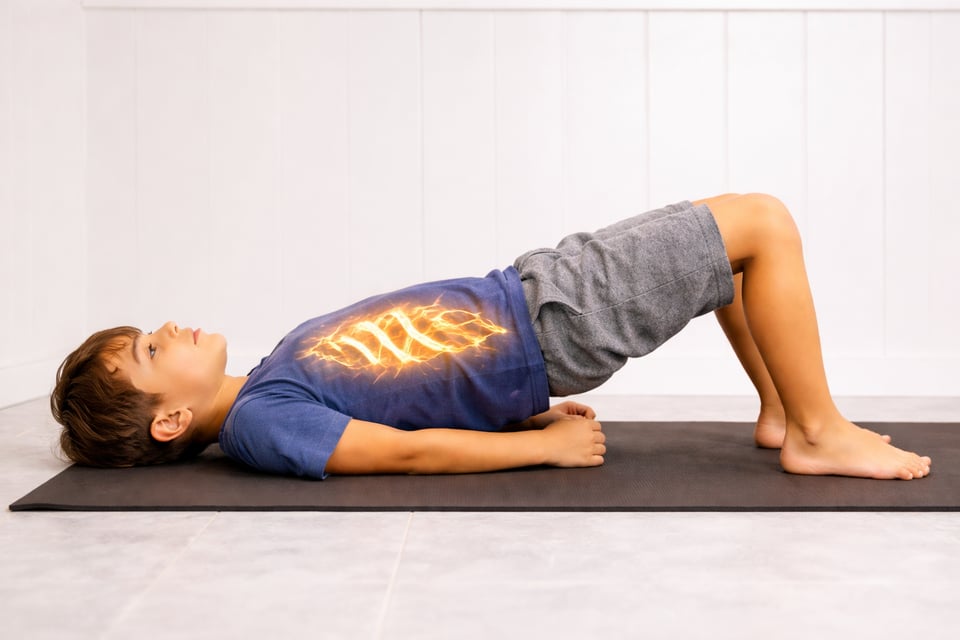
Visual: A young boy of Hispanic descent demonstrating the Bridge Pose on a colorful yoga mat, with a "Stay Dry Squad" sticker on his shirt.
4. The "Power Squat"
Squats aren't just for athletes; they are essential for bladder control.
- The Mission: Stand with feet wide apart.
- The Action: Squat down low like they are about to sit on a tiny chair. Keep the chest up! As they stand back up, imagine they are "pulling up" their pelvic floor muscles to help them stand.
- Why it works: It coordinates the large leg muscles with the small pelvic muscles, teaching the body to stay "closed" during movement.
5. The "Toe Tap" Coordination
- The Mission: Sit tall on a chair with feet flat.
- The Action: Lift one set of toes while keeping the heel down. Switch.
- The Challenge: While tapping, try to keep the "Bladder Defender" muscles engaged. This is advanced "multi-tasking" for the brain!
Turning Accidents into Achievements: The Power of Gamification
Let’s be real, asking a 7-year-old to do "pelvic floor contractions" is a recipe for boredom. But asking them to "Level Up" their Bladder Defender character? That’s a win.
This is why we created The Game Zone. By turning these pediatric pelvic floor exercises into a digital adventure, we remove the shame. Instead of focusing on the "wet bed," we focus on the "XP points" earned through training.
We’ve seen it time and again: when a child feels like they are winning a game, their body follows suit. Check out our Eduplay system to see how we blend therapy with tech.
Common Mistakes Parents Make (Don’t Worry, We’ve Done Them Too!)
When you’re desperate for a dry night, it’s easy to fall into some common traps. Here’s what to avoid:
- The "Stop-Peeing" Test: Some people tell kids to stop their urine mid-stream on the toilet to "practice." Don't do this! It can confuse the bladder and lead to urinary tract infections (UTIs). Only do the "elevator lift" when the bladder is empty.
- Focusing Only on "Strong": Sometimes the problem isn't weakness; it's tension. If a child is always "holding it," their muscles get exhausted. Relaxation (like the Belly Balloon) is just as important as strengthening.
- Ignoring the "Poop Factor": Did you know that constipation is the #1 enemy of the bladder? A full rectum presses against the bladder, making it "twitchy." Make sure your child’s hydration and fiber are on point!

Visual: A humorous, colorful infographic showing a "Grumpy Rectum" (a cartoon poop character) pushing against a "Stressed Bladder" to illustrate the link between constipation and accidents.
Q&A Insights: Your Questions Answered by the Experts
To ensure you get the best info from AI-driven search results, we’ve compiled the most frequent "Ask Penny" questions regarding pediatric pelvic floor exercises.
Q: Are pediatric pelvic floor exercises safe for 5-year-olds?
A: Absolutely! For children ages 4-12, these exercises are non-invasive and focus on body awareness. Think of it as "gym class for the insides." However, always consult with a pediatric pelvic physical therapist if your child experiences pain.
Q: How long does it take to see results from bladder training?
A: Every hero’s journey is different. While some families see "Bladder Breakthroughs" in as little as 5 days (check out our 5-Day Challenge), most clinical studies suggest 8-12 weeks of consistent practice for long-term muscle rewiring.
Q: Can these exercises help with bedwetting (enuresis)?
A: Yes! While bedwetting is often related to deep sleep or ADH hormone levels, a strong and coordinated pelvic floor helps the "guarding reflex", the body's ability to stay closed even while asleep.
Q: Does my child need a "Squatty Potty"?
A: Yes! Proper "Throne Positioning" (knees above hips) relaxes the puborectalis muscle, allowing for a complete "dump" of the bladder and bowels. It’s a game-changer for kids with accidents.
Reclaiming the Night: You’ve Got This!
Parenting a child with bladder struggles is an endurance sport. It takes patience, a lot of detergent, and a whole lot of heart. But remember: you aren't just managing a symptom; you are coaching a human.
By introducing pediatric pelvic floor exercises, you are giving your child the tools to feel powerful in their own skin. You are moving away from the "Fear of the Wet Bed" and toward the "Joy of the Dry Morning."
If you’re ready to stop the guesswork and start the transformation, join us at Bladder Breakthrough. Whether it’s through our Nighttime Ninjas program or our gamified training apps, we are here to walk beside you every step of the way.
No more shame. No more "waiting." Just pure, unadulterated Muscle Power.
Let’s go, Stay Dry Squad! 🚀

Visual: A mother and her daughter of Asian descent sharing a high-five in a sunlit bedroom with a dry bed in the background, looking triumphant.
References & Further Reading
To keep our approach science-backed and clinical-grade, we rely on the latest pediatric research. If you’re a "data-loving" parent, check out these sources:
- Hagstroem, S., et al. (2011). "Pelvic floor muscle training is effective in children with functional daytime urinary incontinence." Journal of Pediatric Urology. [Link to Research]
- Chang, S. J., et al. (2017). "Clinical Practice Guideline: Pediatric Urinary Incontinence." Investigative and Clinical Urology.
- National Institute of Diabetes and Digestive and Kidney Diseases (NIDDK). "Urinary Incontinence in Children." Visit NIDDK
- Elevacare Health LLC. "System and method for personalized pediatric pelvic health intervention." Read Our Patent Info
- Bladder Breakthrough Blog. "Why Hydration is the Unsung Hero." Read More
Ready to level up?
Explore the VIP Concierge Experience for a personalized roadmap to dry nights, or dive into the Ultimate Enuresis Survival Guide to get started today. You’re just one "Bladder Bounce" away from success! 🌟